
Which course can P7 leavers do in Uganda
Which course can P7 leavers do in Uganda. Finishing Primary Seven is a significant milestone — but for many young people in Uganda, what comes next is not always immediately clear. Not every family can afford secondary school fees, and not every student is certain that more years of general academic study is the right path for them. The good news is that completing P7 is enough to begin a genuinely meaningful vocational training journey, and the opportunities available to P7 leavers in Uganda are broader, more practical, and more career-ready than most people realise.
This guide is written for P7 leavers, their parents, and anyone who wants to understand what practical courses are available in Uganda for students at this level — and how to choose the one that leads to a real, sustainable career.
The Truth About P7 Leavers and Vocational Education in Uganda
There is a widespread but deeply mistaken assumption in Uganda that a student who has only completed primary education has very limited options for further training. This assumption has held back thousands of young people who could have been developing marketable, employable skills while their peers were sitting in secondary classrooms. The truth is that Uganda’s vocational training system — governed by the Uganda Vocational Qualifications Framework — recognizes that practical skills development can and should begin at the primary school completion level.
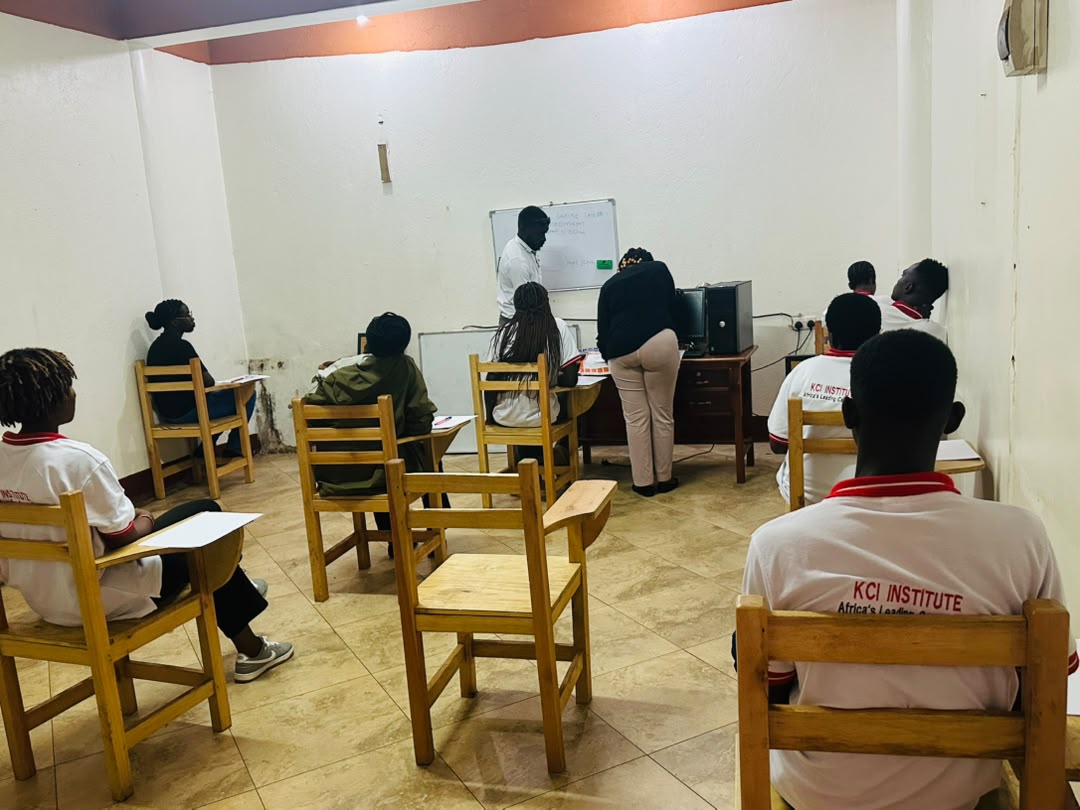
P7 leavers are not at the bottom of any educational ladder. They are at the beginning of a different but equally valid pathway — one that leads to hands-on professional qualifications, early entry into the workforce, and the ability to start earning and building financial independence years ahead of peers who choose the conventional academic route. Institutions like KCI Institute were built specifically to serve students at exactly this stage — offering structured, accredited short courses and diploma programmes that require nothing more than a primary leaving certificate and the motivation to learn.
Short Courses Available to P7 Leavers at KCI Institute
KCI Institute — established in 2009 and located at Plot 149, Dolphin Plaza, Gayaza Road in Kampala — offers a wide range of short courses specifically structured for students who may not hold secondary qualifications. The admission requirements for all short courses at KCI Institute are deliberately accessible: an admission fee of UGX 50,000, any available academic documents, a national ID or passport, and two passport photographs. No specific academic grade or certificate level is required, which means P7 leavers can enrol and begin immediately.
The full list of short courses available covers an impressive breadth of industries and career pathways. In the tourism and hospitality sector, P7 leavers can study Tour Guiding and Driving — a four-month course that trains students to work as professional safari and cultural guides — or Tourism Operations, also four months, which covers how tour companies plan and deliver travel experiences. Tourism and Hospitality is a four-month programme focused on the service and operational skills needed in hotels, lodges, and visitor centres, while Hotel Management and Hospitality runs for five months and goes deeper into management, guest relations, and food and beverage operations. These courses connect directly to Uganda’s booming safari industry, where companies like Kenlink Tours actively seek trained graduates to fill guiding, driving, and operations roles across their year-round safari programmes.
Beyond tourism, KCI Institute’s short course catalogue for P7 leavers includes Hairdressing at three months, Cosmetology and Salon Management at four months, Fashion and Design at five months, Computer Skills and Secretarial at three months, ICT and Web Designing at four months, Digital Marketing at four months, Air-Ticketing Training at two months, Business Administration at four months, Driving with Automatic Transmission at one month, Driving Manual and Automatic at one month, Driving and Mechanics at four months, Automotive Mechanics at four months, and Electrical Installation at four months. Defensive Driving is also available as a two-week intensive programme for students who want to add a specific road safety qualification quickly.
Tourism Courses Are Among the Best Options for P7 Leavers
Of all the pathways available to P7 leavers in Uganda, tourism-related courses deserve special attention — and not only because Uganda’s tourism industry is one of the country’s fastest-growing economic sectors. Tourism courses are particularly well-suited to P7 leavers because they develop the kind of soft skills — communication, confidence, cultural awareness, client management, and problem-solving — that are difficult to learn in any other context and that remain valuable across an entire career regardless of where it leads.
A P7 leaver who completes the Tour Guiding and Driving course at KCI Institute in four months leaves with a nationally recognised certificate, practical skills in wildlife identification and interpretation, safari vehicle operation, first aid, and client communication — and an entry point into an industry where experienced, professional guides can earn incomes that comfortably exceed what many secondary or even university graduates earn in their first roles. The connection between KCI Institute and Kenlink Tours — one of Uganda’s most established safari operators — means that graduates are not simply handed a certificate and sent into the unknown. They have a direct line into an industry network, internship opportunities through the Tourism Internship Uganda programme, and a community of professionals who are invested in their success.
For a P7 leaver who loves people, who is curious about Uganda’s extraordinary wildlife and culture, and who wants a career that is active, meaningful, and financially rewarding, guiding is one of the finest choices available. Operators running gorilla trekking safaris, chimpanzee tracking tours, and extended wildlife safaris need skilled guides at every level, and the supply of properly trained professionals consistently falls short of demand.
Other Practical Courses Worth Considering
For P7 leavers whose interests and strengths lie outside of tourism, several other KCI Institute short courses stand out as particularly strong career investments. Fashion and Design — a five-month course — trains students in garment construction, pattern making, and fashion production, skills that translate directly into self-employment or employment in Uganda’s growing textile and clothing sector. The Cosmetology and Salon Management course at four months equips students to work professionally in salons and beauty businesses or to open their own — one of the most consistently in-demand service businesses in any Ugandan town or city.
Computer Skills and Secretarial at three months, and Digital Marketing at four months, give P7 leavers entry into the digital economy — teaching practical skills in office computing, internet use, and online marketing that are increasingly valued across every industry sector. Automotive Mechanics at four months and Electrical Installation at four months both lead directly into trades with strong and consistent demand across Uganda’s growing construction and infrastructure sectors, with real self-employment potential. The Business Administration course at four months gives students foundational skills in running and managing a business — useful both for employed roles and for anyone with entrepreneurial ambitions.
Online and Physical Study Options
One of the most important things for P7 leavers — many of whom come from families where finances are stretched and daily commitments are real — is that KCI Institute offers both physical programmes at its Kampala campus and online study options that allow students to learn from home or from wherever they are in Uganda. The online route delivers the same curriculum and the same nationally recognised qualification as the in-person programme, removing the barrier of having to relocate to Kampala to access quality vocational education.
The admission process is straightforward and processed quickly. Students can also explore the business consultation services the institute offers for those who want to think through not just their course choice but their longer-term career and entrepreneurial direction. The institute’s team — led by Principal Hafasha Keneth, who is also the founder of Kenlink Tours — brings direct industry experience to the guidance they offer students, which is rare in Uganda’s vocational training landscape.
Why Starting After P7 Is an Advantage, Not a Setback
The framing matters enormously here. A P7 leaver who enrols in a four-month tourism or vocational course at KCI Institute and completes it can be working professionally — earning, building experience, and growing a career — by the time their peers are finishing Senior Four. By the time those peers complete Senior Six and begin thinking about university, the P7 leaver who chose the vocational route could have two years of field experience, a growing professional reputation, and the savings to continue their education further if they choose.
Vocational training is not a consolation prize. It is a parallel track that simply moves faster and gets students into meaningful work sooner. The diploma programmes available at KCI Institute — including Tours and Travel Management, Tourism and Hospitality, Driving and Tour Guiding, Hotel Management, and Business Administration — provide a clear progression route for P7 leavers who complete a short course and want to deepen their qualification without the years-long commitment of a university degree.
If you are a P7 leaver in Uganda wondering what to do next, the answer is simpler than it might seem. Choose a course that matches your interest and strengths, enrol at an institution that is connected to the industry you want to enter, and start building the skills that will define your career. KCI Institute is that institution. Apply today and take the first step that changes everything.

