
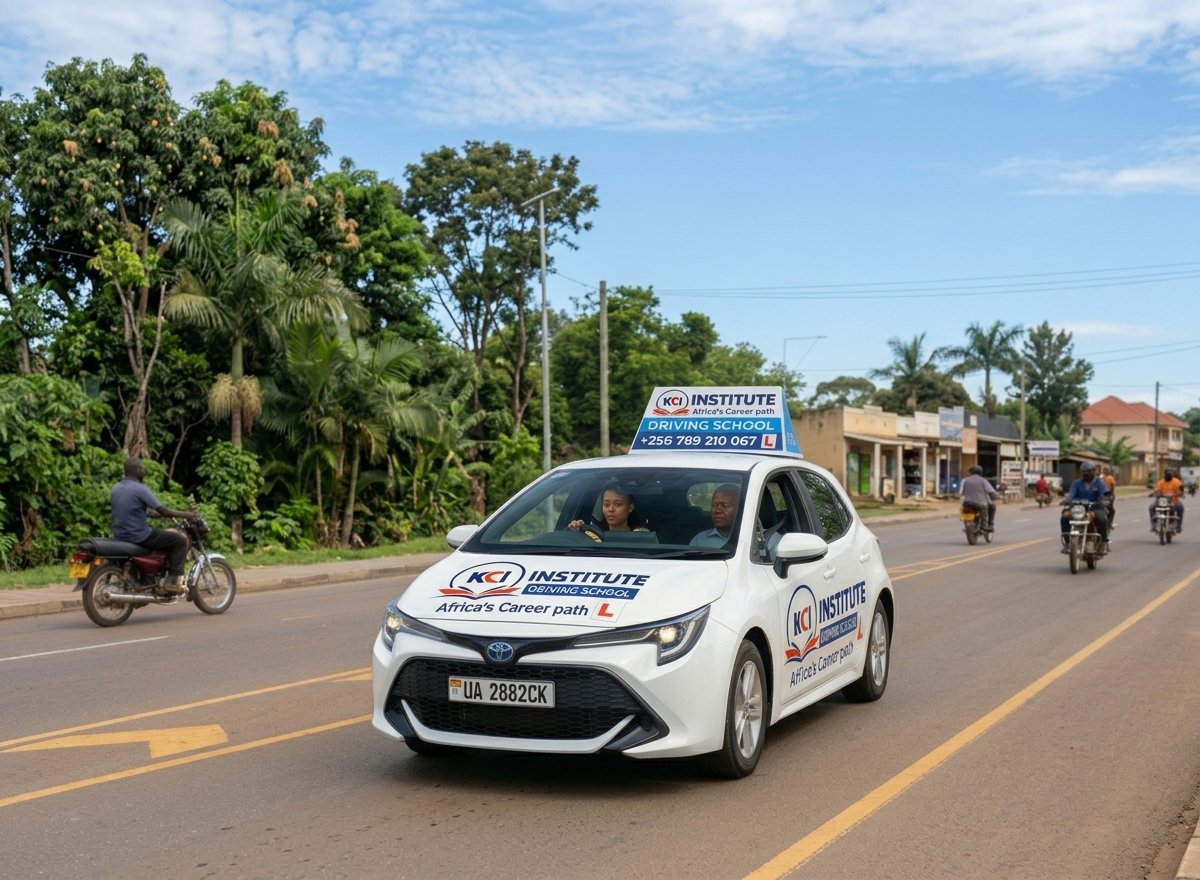
How long is driving training in Uganda
How long is driving training in Uganda. “How long will it take me to learn driving?” is one of the first questions every new learner asks. The honest answer is that it depends on the vehicle, the course and how often you train. Most beginners in Uganda can go from their first lesson to a full driving licence in about one to two months. Professional programmes that add mechanics, tour guiding or heavy vehicles take longer, from a few weeks up to two years.
This guide breaks down exactly how long driving training in Uganda takes, what the law requires, how the time is spent, and how to plan your schedule so you finish on time. At KCI Institute (Kenlink Comprehensive Institute) in Kampala, we have run practical skills training since 2009, and these timelines are based on the courses we teach every intake.
Quick Answer: How Long Does Driving Training Take in Uganda?
Here is a fast summary before we go into detail:
- Beginner car driving (automatic or manual): about 1 month of lessons
- Defensive driving refresher for licensed drivers: about 2 weeks
- Driving and mechanics: about 4 to 6 months
- Tour guiding and driving: about 4 months, plus field placement
- Heavy machinery operation: 2 to 6 weeks per machine
- Certificate and diploma programmes in driving: 1 to 2 years
Add a few days to a few weeks on top of your lessons for paperwork and the official driving test, and you have a realistic picture of the total time.
Does Uganda Set a Minimum Training Period?
Uganda’s law does not fix a set number of weeks for learner drivers. What it does require is that you train properly with a licensed school before you can be tested. Under the Traffic and Road Safety Act, 1998 and the driving test regulations published by the Ministry of Works and Transport, a learner may only sit the driving test after completing a driver training course with a licensed driving school for the class of vehicle they want to drive.
Two official timelines also shape how long your training can realistically take:
- Your learner licence lasts three months. According to the Uganda Driver Licensing System (UDLS), the learner licence is valid for three months, giving you time to train with a driving school and test with the Inspectorate of Vehicles. If it expires before you pass, you must renew it and pay again.
- The medical report lasts six months. The medical examination on your learner licence application form is valid for six months from the date the doctor signs it.
In practice, this means a beginner course should be planned to fit comfortably inside the three-month learner licence window, with time left over to book and sit the test.
The Full Timeline: From Enrolment to Driving Licence
Here is how a typical beginner’s journey looks from start to finish in Kampala.
Stage 1: Enrolment and Learner Licence (1 to 7 days)
You enrol with a licensed driving school, which gives you a letter of enrolment. You then get a medical examination, generate a payment registration number through the Uganda Revenue Authority (URA) portal, pay the UGX 60,000 learner licence fee, and submit your documents to a UDLS office. If your National ID, medical form and payment are ready, this step can take as little as a day or two.
Stage 2: Theory Lessons (about 1 to 2 weeks)
Theory covers the Highway Code, road signs and markings, traffic rules, right of way, vehicle controls and basic mechanics. Many experienced instructors in Kampala recommend roughly two weeks of theory at the start of a beginner course. It matters: the official theory test requires a score of at least 75 percent before you can sit the practical test.
Stage 3: Practical Training in the Yard (about 1 week)
Before you go onto public roads, you learn the basics in a safe training ground: starting and stopping, steering, clutch control and gear changes for manual cars, reversing, parking and hill starts.
Stage 4: On-Road Practice (about 2 to 3 weeks)
This is where real confidence is built. You practise in live Kampala traffic: junctions, roundabouts, lane changes, overtaking, busy taxi stages and boda boda traffic. Your instructor will also teach defensive driving, which means anticipating hazards before they happen.
Stage 5: Mock Tests and Test Day (1 to 2 weeks)
Once your instructor is satisfied, you take mock theory and practical tests, pay the UGX 25,000 driving test fee, and your school presents you to the Inspectorate of Vehicles, a department of the Uganda Police Force. The test has a theory stage and a practical stage, carried out in an open ground and in traffic on a public road.
Stage 6: Full Licence Processing (1 to 3 days)
After you pass, you receive a certificate of competence and return to UDLS, where your documents are checked, your biometrics captured and your licence issued. Check the latest charges on the official UDLS fees page before you go.
Total for a typical beginner: about 5 to 8 weeks, comfortably within the three-month learner licence period.
How Long Each Driving Course Takes at KCI Institute
Different goals need different amounts of training. Here is how long our main driving programmes take. Full details are on our courses page, and you can compare costs on our fee structure.
| Course | Typical Duration | Best For |
|---|---|---|
| Driving (Automatic) | 1 month | First-time drivers who only need automatic |
| Driving (Manual + Automatic) | 1 month | Beginners who want to drive any car |
| Defensive Driving | 2 weeks | Licensed drivers, company and NGO drivers |
| Tour Guiding and Driving | 4 months | Safari drivers and tour guides |
| Driving + Mechanics | 4 to 6 months | Drivers who want to maintain and repair vehicles |
| Automotive Mechanics | 4 months | Aspiring mechanics and garage workers |
| Heavy machinery (per machine) | 2 to 6 weeks | Construction and plant operators |
| Certificate / Diploma programmes | 1 to 2 years | Long-term careers in transport and tourism |
Beginner Driving Course: About 1 Month
Our beginner course is designed to take a complete newcomer to test-ready in about four weeks of regular lessons. You can choose automatic only, or manual plus automatic. Learning both does not usually add much time, and it gives you far more flexibility for jobs. To see what a typical lesson covers, read our guide to driving lessons in Uganda.
Defensive Driving Course: About 2 Weeks
If you already hold a licence but want to drive more safely or meet an employer’s requirement, our two-week defensive driving course focuses on hazard perception, safe following distances, night and rain driving, and emergency handling. Many organisations ask for a defensive driving certificate when recruiting drivers.
Driving and Mechanics: About 4 to 6 Months
This programme combines full driving training with practical vehicle maintenance, diagnostics and repairs. Study can be full-time or part-time, which is why the duration ranges from about four to six months. Learn more on our Driving and Mechanics Course page, or read about the longer national certificate route in our automotive mechanics course in Uganda guide.
Tour Guiding and Driving: About 4 Months
Our Tour Guiding and Driving Course runs for 16 weeks and covers off-road and defensive driving in 4x4s and safari vans, alongside wildlife, culture and client care. Students then complete about a month of industrial placement with tour companies and national parks. Compare it with the one- and two-year options in our tour guiding short courses article.
Heavy Trucks, Buses and Machinery: 2 to 8 Weeks
Heavy vehicle courses are shorter but more intensive, and they suit learners who can already drive. Bus training takes about eight weeks, while machine operator courses run from about two weeks for a forklift or bobcat to around five or six weeks for mobile and tower cranes. See heavy truck and bus training and our heavy machinery training price list for durations per machine.
Factors That Affect How Long Your Training Takes
Two learners in the same class can finish at different times. These are the main factors:
- How often you train. Daily lessons will get you test-ready far faster than weekend-only sessions. If you can only train once or twice a week, expect a beginner course to stretch to six or eight weeks.
- Manual or automatic. Automatic cars are quicker to learn because there is no clutch or gear changing. Manual takes a little longer but is worth it.
- Previous experience. Someone who has driven a little before, or rides a motorcycle, often picks up road awareness faster.
- Confidence and nerves. Anxious learners may need extra on-road sessions. A patient instructor makes a big difference.
- Class of vehicle. Motorcycles and light vehicles take less time than buses, trucks or construction machinery.
- Paperwork and test scheduling. Missing documents or an expired medical form can delay your learner licence or test. Prepare everything early.
- Choosing a licensed school. Only a licensed school can present you for the test. Check the current list of licensed driving schools before you pay, so you do not lose time starting again elsewhere.
Can You Learn to Drive in One or Two Weeks?
Some schools advertise “learn to drive in a week” packages. While a fast learner can master basic car control in a few days, a week is rarely enough to become safe in real Kampala traffic or to learn the Highway Code well enough to score 75 percent on the theory test. Rushed training is one reason many new drivers struggle on the road. If time is short, a better plan is an intensive daily schedule over three to four weeks, so you still get proper theory, yard practice and on-road experience.
A Sample One-Month Beginner Schedule
To help you plan, here is how a typical one-month beginner course at KCI Institute is structured:
- Week 1: Highway Code, road signs and vehicle controls in class; first yard sessions on starting, stopping and steering.
- Week 2: More theory and revision; yard practice on gears, reversing, parking and hill starts.
- Week 3: On-road driving in quiet and moderate traffic; junctions, roundabouts and defensive driving.
- Week 4: Busy city driving, mock theory and practical tests, final corrections and test preparation.
Learners who need more time can add extra practical sessions before booking their test.
Tips to Finish Your Driving Training Faster
- Prepare your documents first. Have your National ID, completed medical form and payment ready before you visit UDLS.
- Train consistently. Short, regular lessons are more effective than long gaps between sessions.
- Study theory at home. Revise road signs and the Highway Code every evening so class time can focus on driving.
- Ask for feedback. After each lesson, ask your instructor what to work on next.
- Book your test early. Plan your test date well before your three-month learner licence expires.
- Practise in different conditions. Try morning traffic, rain and evening driving so nothing surprises you on test day.
Frequently Asked Questions
How long does it take to get a driving licence in Uganda?
For most beginners, about five to eight weeks from enrolment to receiving a full licence, including training, the driving test and processing.
How long is a learner licence valid in Uganda?
Three months. If it expires before you pass your test, you must renew it.
How many hours of driving lessons do I need?
There is no fixed legal number of hours. Most beginners need a few weeks of combined theory and practical lessons, and more if they train infrequently or feel nervous on the road.
Is it faster to learn automatic than manual?
Usually yes, by a few lessons. However, learning manual and automatic together in a one-month course gives you more job options.
When can I start a driving course at KCI Institute?
Our main intakes run February to April, May to July and September to October, but short driving courses can often start at any time. Contact us to confirm the next class.
Start Your Driving Training at KCI Institute
Whether you need a licence in a month, a two-week defensive driving refresher or a full career programme, the right course and a steady training schedule will get you there safely and on time. Explore our other short courses in Kampala, learn more about Kenlink Comprehensive Institute, or see how we compare with other institutes in Uganda.
Ready to begin? Call +256 789 210 067 or +256 200 955 001, email info@kenlinkinstitute.ac.ug, or visit us at Plot 149, Dolphin Plaza, Gayaza Road, Mulago Kubiri, Kampala.
