
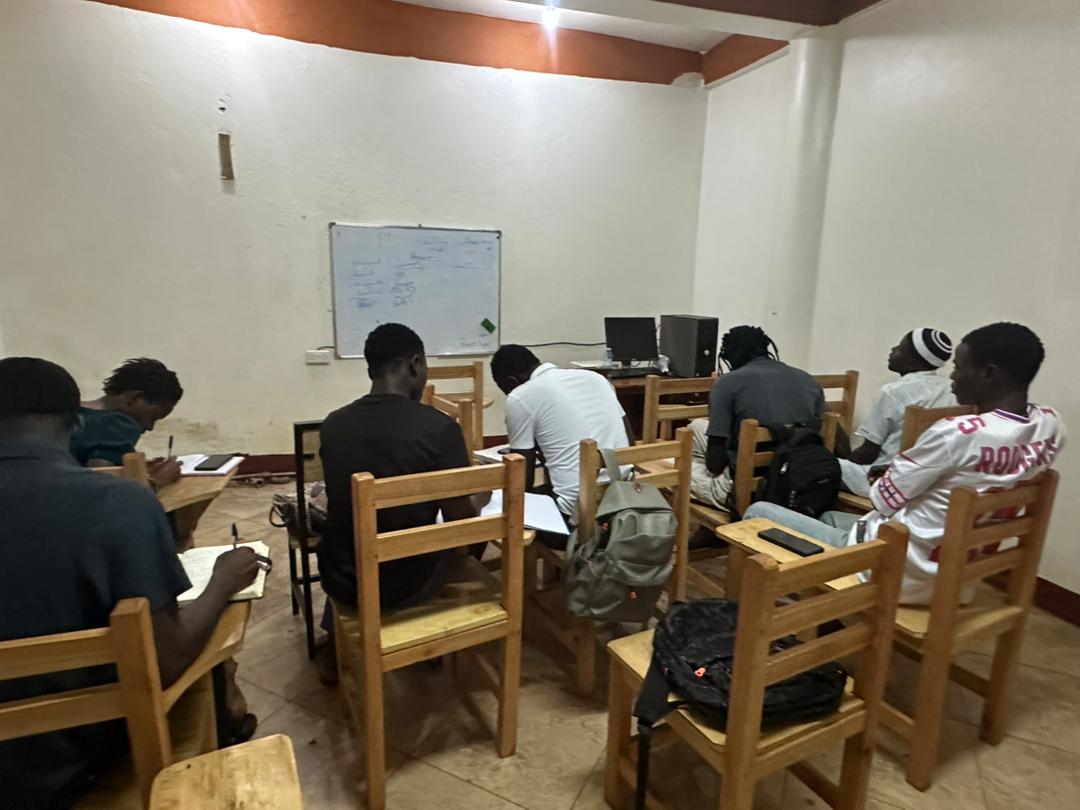
Best English Learning Centers in Uganda
Best English Learning Centers in Uganda. Uganda’s appetite for English is not slowing down. Employers expect it, universities teach in it, and travelers passing through Kampala rely on it daily — yet not everyone learning English in Uganda wants a traditional “school.” Many prefer a learning center: a flexible, results-driven environment built around short, structured levels rather than long academic years. If you have been typing “best English learning centers in Uganda” into Google, this guide is for you. We will walk through exactly what separates a strong center from a weak one, and why Kenlink Institute in Kampala has become a go-to name for learners who want measurable progress without wasting time or money.
Learning centers differ from universities in one important way: speed. A good center gets a beginner speaking confidently within months, not years, because everything — the timetable, the teachers, the materials — is designed around fast, practical fluency. That focus is exactly what we will evaluate below, section by section, so that by the end of this guide you have a clear checklist rather than a vague impression of what “good” looks like.
Learning Center vs. Traditional School: What’s the Difference?
A traditional school often teaches English as one subject among many, spread across a long academic calendar. A dedicated learning center, by contrast, exists purely to build language skill, which usually means shorter, more intensive levels, smaller class sizes, and a curriculum built entirely around speaking, writing, listening, and reading — not exams in unrelated subjects. Kenlink Institute operates this way through its Language Courses department, while still sitting inside a larger institution with its own history and mission that gives students the stability of an established campus.
Why Kampala Leads Uganda’s English Learning Scene
Almost every serious English learning center in Uganda is based in or around Kampala, and for good reason. The capital concentrates universities, NGOs, embassies, and multinational employers who demand strong English communication, which in turn creates constant demand for quality training. It also means learners get built-in immersion — English is spoken in offices, markets, and taxis across the city, reinforcing whatever is taught in the classroom that same day. Centers such as Kenlink Institute’s Kampala campus and the well-known Uganda Language School both benefit from this dense, English-using environment in ways that a rural or remote program simply cannot replicate. Even learners who join through an online format still tend to visit the city for orientation, assessments, or graduation, picking up the accent, idioms, and confidence that only come from being surrounded by other English speakers day to day.
Kenlink Institute: A Structured, Career-Focused Learning Center
Kenlink Institute has built its English program around three clear levels, each lasting about three months, so learners always know their current stage and their next milestone. Full details on level content, duration, and objectives are laid out on the Language Courses page. What makes this center stand out from informal tutoring setups is that it operates alongside a full catalogue of vocational and professional courses, so English learners are studying inside a genuine institutional environment — complete with accountability, records, and a campus community — rather than a one-person tutoring arrangement that can disappear overnight. That institutional weight also means class schedules, examinations, and certificates follow a consistent standard term after term, instead of shifting informally depending on who happens to be available to teach that week.
Uganda Language School: A Long-Standing Alternative Worth Knowing
No honest comparison of English learning centers in Uganda would skip Uganda Language School, one of the country’s more established names in language training. Its English Language Course follows a similar level-based structure, with roughly 50 lessons per level and a mix of grammar, vocabulary, and speaking practice. The school also publishes useful independent research, including a breakdown of the best language schools within Kampala city and a cost comparison titled How Much Is Studying English Language in Uganda. Reviewing both of these before choosing a center is a smart, low-cost way to sanity-check pricing and reputation across the market.
Key Features to Compare Before You Enroll
Not all centers are equal, and a few checks can save you months of frustration. First, ask whether the curriculum is level-based or open-ended — level-based programs, like the one on Kenlink Institute’s Language Courses page, give you a measurable finish line. Second, check whether fees are published openly; Kenlink Institute lists everything on its Fee Structure page rather than negotiating case by case. Third, look at instructor credentials via pages such as Teacher and Instructors. Finally, confirm the center has a real physical address and support channel, which you can verify through Contact Us before sending any money.
What You Should See in Your First Month
A genuinely good English learning center makes progress visible almost immediately, and Uganda’s better programs are no exception. In the first few weeks at a well-run center, expect a placement assessment that puts you in the right level rather than a generic starting point, regular short quizzes rather than one intimidating exam at the end, and a teacher who corrects pronunciation in real time instead of waiting for a scheduled review. Kenlink Institute builds this rhythm into its Language Courses program from day one, and learners who feel like month one was “just orientation” with little real feedback should treat that as a warning sign about the center itself, not about their own ability. If progress ever feels unclear, a quick message through Contact Us should get you a straight answer about where you stand and what comes next.
Class Formats: Full-Time, Part-Time, Evening, and Online
Working adults are one of the largest groups enrolling in English learning centers in Uganda, so scheduling flexibility matters as much as curriculum quality. Kenlink Institute addresses this through dedicated online courses for learners who cannot attend in person, alongside standard daytime classes. This mirrors the approach at Uganda Language School’s language program, which likewise runs morning, evening, weekend, and online formats, and it’s echoed in blog resources like Online English Lessons in Uganda for learners specifically hunting for remote options.
Teacher Quality Is the Real Differentiator
Two centers can use nearly identical textbooks and still produce wildly different results, and the difference almost always comes down to the teacher in the room. Strong centers rotate teaching methods — pair work, listening drills, timed writing, and open discussion — instead of lecturing from a single script. Prospective students at Kenlink Institute can review the people responsible for this on the Teacher page, and the wider Instructors directory shows the depth of teaching talent across the institute’s other departments too, which is a reasonable proxy for how seriously a center invests in its staff.
Pricing and Real Value for Money
Cost matters, but the cheapest center is rarely the best value once you factor in wasted time from disorganized classes or unqualified teachers. Kenlink Institute keeps its pricing transparent on the Fee Structure page, with clear per-level costs so learners can budget the entire program upfront. For a market-wide perspective, the independent guide How Much Is Studying English Language in Uganda is a useful reference point when comparing quotes from different centers around Kampala.
How Admission Works at Kenlink Institute
Enrolling should not require weeks of back-and-forth. At Kenlink Institute, the process starts with reviewing requirements on the Admission page, followed by completing the Submit Your Application form, or the quicker Make Your Application Here option for learners who already know which level they want to join. Payment is handled through the Pay For Your Admission portal, and any questions along the way can go straight to the team via Contact Us.
Pairing an English Learning Center with Career Training
Many learners in Uganda treat English as step one of a bigger career plan, not the final destination. That is where a full-service institute has an edge over a standalone language center. Kenlink Institute’s campus also runs Business Consultation services, practical programs like Heavy Machinery Training, and specialist certificates such as the Certificate in Hair Dressing and Salon Management. Graduates who finish their English levels can move straight into these programs, or apply directly for openings listed on the Job Opportunities page — a genuinely useful bridge that a language-only center cannot offer.
Learning English While Exploring Uganda
Uganda’s nickname, “the Pearl of Africa,” is not just marketing — it is one more reason learners choose a Kampala-based center over an online-only option elsewhere. Between levels, many students use the break to explore, and operators like Kenlink Tours make that easy with guides such as their introduction to Uganda and curated Uganda safari packages. Longer-term learners sometimes combine study with hands-on work through the Tourism Internship Uganda program, which puts fresh English skills to immediate use in a professional, guest-facing setting — arguably the fastest way to convert classroom English into real fluency.
Common Mistakes People Make Choosing a Center
The most frequent mistake is enrolling based on price alone, without checking whether the center offers a level-based curriculum like Kenlink Institute’s Language Courses program. The second is skipping teacher research entirely — a quick look at Instructors pages across a few centers reveals a lot about training culture. The third is ignoring flexibility; if a center cannot offer evening, weekend, or online classes, working learners often quietly drop out within weeks. Finally, many learners forget to check for physical proof of a center’s activity — Kenlink Institute’s own Events and Notice pages are exactly the kind of ongoing activity a legitimate, active center should be able to show. A related mistake is assuming every center offering “English lessons” is actually built for adult professionals; some are really aimed at school-age children or exam prep alone, so it pays to ask directly whether a program’s language course structure matches your own goals, whether that’s workplace communication, travel, or academic writing, before you pay any registration fee.
Frequently Asked Questions
What is the difference between a learning center and a language school? In practice the terms overlap, but centers usually emphasize shorter, intensive levels focused purely on speaking and practical use, the model followed on Kenlink Institute’s Language Courses page.
Can I learn English in Uganda without attending in person? Yes — both Kenlink Institute’s online courses and Uganda Language School’s online English lessons support fully remote learners.
How much should I expect to pay? Costs vary by center and level; check Kenlink Institute’s own Fee Structure alongside the independent breakdown in How Much Is Studying English Language in Uganda before committing.
Is it worth combining study with travel? Many learners think so — a Uganda safari booked between levels is a popular way to unwind and practice English with fellow travelers at the same time.
Final Verdict: The Best English Learning Center in Uganda
Across structure, transparency, teacher quality, flexible formats, and real career pathways, Kenlink Institute consistently comes out ahead of standalone language centers operating in isolation. Its Language Courses give learners a measurable path from beginner to fluent, its pricing is published upfront, and its wider campus means an English certificate opens doors into further training and employment rather than standing alone.
If you are ready to stop comparing and start learning, review the Admission requirements and complete your application today — Uganda’s best learning centers fill up fast, and the sooner you enroll, the sooner fluent English starts working for you.
Whichever center you eventually choose, treat this decision the way you would any other investment in your future: ask for the curriculum in writing, ask to see published pricing, ask who exactly will be teaching you, and ask what happens if the schedule stops fitting your life. Centers confident in their own quality, like Kenlink Institute, will answer every one of those questions without hesitation — and that confidence, more than any advertisement, is usually the clearest sign you have found the right place to finally become fluent.

