
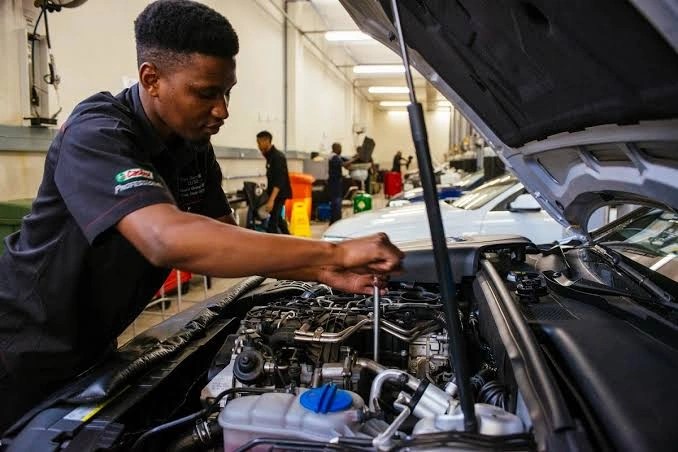
Mechanics Courses in Uganda
Mechanics Courses in Uganda. Walk down any street in Kampala, Mbarara, Gulu or Jinja and you will pass a car bonnet propped open, a boda-boda being fixed, or a truck waiting for a diesel mechanic — Uganda runs on vehicles and machines, and every single one of them eventually needs a skilled hand to keep it moving. That constant, unavoidable demand is why mechanics courses in Uganda are consistently among the most enrolled technical trades at KCI Institute (Kenlink Institute). Whether you are a school leaver, a boda-boda or matatu driver wanting to formalise your skills, or someone eyeing the booming construction and haulage sector, this guide breaks down the top mechanics courses in Uganda, what you will learn, what they cost, and exactly how to get certified and hired.
From roadside garages to national construction sites and the safari vehicle fleets that keep Uganda’s tourism industry moving, trained mechanics are needed everywhere. Below, we walk through each in-demand programme, explain why government-recognised certification matters, and show you where to gain real workshop experience before you graduate.
Why Demand for Skilled Mechanics Is Rising in Uganda
Uganda’s vehicle fleet keeps growing every year, driven by rising imports, a booming boda-boda and matatu transport sector, and an active road-construction industry overseen by the Uganda National Roads Authority. Every new road opens up new routes for trucks, buses and heavy equipment, and every one of those machines needs regular servicing. The Ministry of Works and Transport, which oversees national transport policy, and the Uganda National Bureau of Standards, which sets vehicle and workshop safety standards, both point to the same reality: Uganda has far more vehicles and machines on the road than it has certified technicians to maintain them. That gap is exactly where a trained graduate of a good mechanics course in Uganda steps in.
Why You Should Study a Mechanics Course in Uganda Today
A mechanics course is one of the fastest, most affordable routes into steady income in Uganda. Unlike careers that require years of university study, a certificate in automotive or diesel mechanics can have you working in a garage, a construction site, or running your own workshop within a few months. According to our overview of The Best Certificate Courses You Can Study in Uganda, technical trades like mechanics consistently rank among the highest-earning short courses because supply of certified technicians has not caught up with demand.
Trained mechanics are also more employable and better paid than informally trained “garage boys,” because employers, insurance companies and equipment owners increasingly ask for proof of certification before they hand over a vehicle or a machine worth tens of millions of shillings. A recognised certificate protects both your income and your reputation.
Top Mechanics Courses in Uganda Right Now
Below are the mechanics and technical trade programmes currently attracting the most enrolments at KCI Institute’s technical training department. Each one is built around the actual skills employers in Uganda’s transport, construction and haulage industries are hiring for.
1. Petrol Engine (Automotive) Mechanics
This is Kenlink Institute’s flagship mechanics programme and one of its best-selling technical courses. Students learn engine diagnosis, ignition and fuel systems, brake and suspension repair, and general car servicing on real vehicles in the workshop. You can read the full breakdown, fees and entry details in our guide to the Automotive Mechanics Course in Uganda. Graduates typically go straight into garage employment or open their own roadside repair business.
2. Diesel Engine Mechanics
Trucks, buses, generators and most heavy machinery run on diesel, which makes this one of the highest-demand specialisations on the market. The course covers diesel fuel injection systems, turbochargers, and heavy-duty engine overhauls. It pairs naturally with the heavy equipment programmes on our Heavy Machinery Training page, since most plant operators also want a mechanic on their team who understands diesel systems.
3. National Certificate in Motor Vehicle Driving and Mechanics (MVDM)
For students who want to combine driving competence with hands-on repair skills, the National Certificate in Motor Vehicle Driving and Mechanics (MVDM) is one of the most practical, job-ready qualifications available. It suits future professional drivers, fleet mechanics, and entrepreneurs planning to start a vehicle hire or repair business, similar to the driver-mechanic teams that keep a safari fleet such as Kenlink Tours’ car hire fleet running reliably across long upcountry routes.
4. Heavy Machinery and Plant Mechanics
Excavators, graders, front-end loaders, cranes and bulldozers all need specialist maintenance that a general car mechanic is not trained for. This course, detailed further in Heavy Machinery Training Schools in Uganda, teaches hydraulic systems, engine overhauls and preventive maintenance schedules for construction and mining equipment, and is one of the highest-paying specialisations for graduates who complete it.
5. Welding and Boiler Making
Many mechanics graduate into fabrication and metalwork, since welding is used constantly in vehicle body repair, chassis work, and machine fabrication. This complementary technical trade is a popular add-on for students who want to widen their skill set and their earning potential beyond pure engine work.
6. Hydraulic Systems Repair
Hydraulics power everything from excavator arms to tipper trucks and mobile cranes. This specialised, shorter course is ideal for mechanics who already understand engines and want to move into higher-paying plant maintenance roles, where hydraulic faults are some of the most common and most expensive breakdowns on a construction site.
DIT & UVTAB Certification: Why Accreditation Matters
Not every “mechanics certificate” in Uganda carries weight with employers. Kenlink Institute’s technical trade courses are trained toward assessment by the Directorate of Industrial Training (DIT), the government body under the Ministry of Education and Sports responsible for trade testing and certifying vocational skills such as motor vehicle mechanics, and by the Uganda Vocational and Technical Assessment Board (UVTAB), which handles competency-based assessment for vocational training nationwide. You can see DIT’s official Qualifications Standards and its Assessment and Certification process for a full picture of how trade testing works in Uganda. We also explain what this accreditation means for students in our article on the Uganda Vocational and Technical Assessment Board (UVTAB). Choosing a course aligned to these government standards means your certificate is recognised nationally — something that matters enormously when a garage owner, construction company or equipment dealer is deciding who to hire.
Career Opportunities After a Mechanics Course in Uganda
Graduates typically move into roles such as garage and workshop mechanic, fleet maintenance technician, plant and heavy equipment mechanic, diesel technician for trucking and haulage companies, self-employed roadside mechanic, or workshop supervisor. Many graduates also find steady contracts maintaining vehicle fleets for logistics firms, construction companies and tour operators — for example the kind of 4×4 safari vehicles used on itineraries such as Kenlink Tours’ Uganda Safaris, which depend on well-maintained vehicles for long, remote journeys to national parks. With Uganda’s road network expanding under projects tracked by the Uganda National Roads Authority, and vehicle numbers rising every year, demand for certified mechanics is expected to keep growing well beyond 2026.
Getting Real-World Experience: From Workshop to the Road
No mechanic becomes confident from theory alone. That is why hands-on practice matters so much in technical trade training. Students at KCI Institute train on real engines, real vehicles and real machinery in the workshop, and are encouraged to pursue attachments with garages, construction firms and transport companies to build practical experience before graduating. Road safety awareness is also part of responsible mechanic training, and students are encouraged to stay familiar with the Uganda Police Force’s traffic and road safety guidelines, since roadworthy repairs directly affect the safety of everyone on Uganda’s roads.
Starting Your Own Garage or Spare Parts Business
A mechanics qualification is not only a route to employment — it is also one of the most reliable paths to self-employment in Uganda. Many graduates go on to open their own roadside garages, mobile repair services, or spare parts shops once they have built up enough clients and savings. If a spare parts or import-and-repair business is part of your long-term plan, it is worth getting familiar early with the Uganda Revenue Authority’s tax guidance for car spare parts dealers and its general import and export FAQs, so you understand duty and registration obligations before you start ordering parts. KCI Institute’s Business Consultation service can also help you plan pricing, licensing and workshop setup once you are ready to go independent, and our overview of Our Courses shows complementary skills, such as basic bookkeeping, worth pairing with a technical trade.
Entry Requirements and How to Apply at KCI Institute
Most mechanics courses at KCI Institute have minimal academic requirements — many are open to Senior Four and Senior Six leavers, and some accept adult learners with no formal certificate at all, since the training is practical and skills-based. Exact entry requirements, intake dates and course duration are listed on our Admission page, and full pricing is available on our Fee Structure page or in our detailed cost breakdown, Price for Mechanical Engineering Course in Uganda. When you are ready, begin your application directly through Submit Your Application, or reach our admissions team through Contact Us if you have questions first.
Why Choose Kenlink (KCI) Institute for Mechanics Training
KCI Institute combines government-aligned DIT and UVTAB curriculum, experienced workshop instructors, and real engines and machinery for students to train on, giving graduates a genuine bridge from classroom to career. If you are still comparing your options, our guide on Where to Train Mechanics in Uganda explains what to look for in a training centre before you enrol anywhere. Beyond mechanics, the institute also offers Business Consultation services for graduates who want to open their own garage or repair business, and you can learn more about the institute’s mission on our About Us page, or browse current technical job openings on our Job Opportunities page. Mechanics who plan to work with international fleet owners, expatriate clients or overseas equipment dealers often pair their technical certificate with one of our Language Courses, while students who need to balance training with an existing job can review theory modules through our Online Courses options before coming in for hands-on workshop sessions.
Frequently Asked Questions About Mechanics Courses in Uganda
How long does a mechanics course in Uganda take? Most certificate courses run from five to eight weeks for a single specialisation, while combined programmes such as the MVDM certificate can run several months.
Do I need a Senior Six certificate to study mechanics? No. Most mechanics and heavy machinery courses accept Senior Four (UCE) leavers, and some accept learners with no formal academic papers at all, as outlined in our guide for the Top 8 Best Courses a Senior 4 Leaver Can Do in Uganda.
Is mechanics a good career in Uganda? Yes. With vehicle numbers and road infrastructure both expanding, and workshops increasingly required to hire DIT or UVTAB-certified staff, trained mechanics remain in steady demand across the country.
Can I combine a mechanics course with driving training? Yes — many students take the Motor Vehicle Driving and Mechanics (MVDM) certificate specifically because it combines both skills, which employers value highly for fleet and logistics roles.
Final Thoughts: Start Your Mechanics Career Today
Uganda’s vehicles, machines and construction sites are not going anywhere, and neither is the demand for certified technicians who can keep them running safely. Whether your interest lies in car engines, diesel trucks, heavy plant equipment or welding and fabrication, KCI Institute’s top mechanics courses in Uganda are built to get you workshop-ready fast, with government-recognised certification behind you.
The sooner you enrol, the sooner you can be earning from a hands-on trade that will always be in demand. Explore the full list of technical programmes on our Heavy Machinery Training page, compare fees on our Fee Structure page, and take the first step toward a stable, practical career by visiting Submit Your Application today.

