
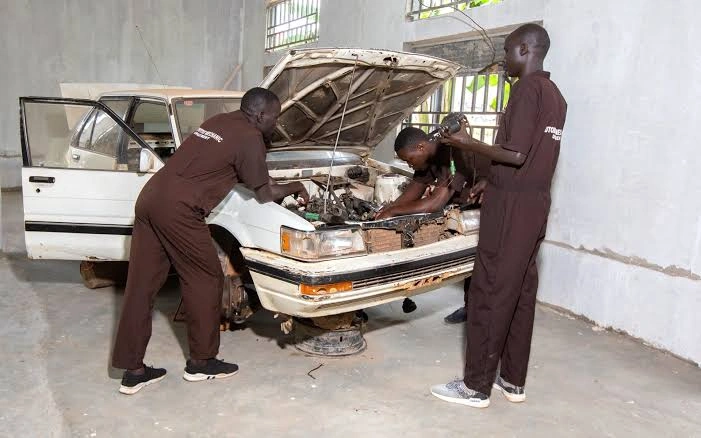
Certificate in Automobile Mechanics
Certificate in Automobile Mechanics. Every car, taxi, boda-boda and pickup truck on Uganda’s roads will eventually break down, and someone has to fix it. That simple fact is why the Certificate in Automobile Mechanics remains one of the most consistently in-demand technical qualifications offered at KCI Institute (Kenlink Institute). It is short, practical, affordable, and leads directly into paid work or self-employment. This guide covers exactly what the certificate involves, what it costs, who can apply, how it is accredited, and what your career can look like once you complete it.
If you are choosing between several technical courses, this article focuses specifically on the automobile mechanics certificate. For a broader comparison of related trades, see our wider guide to Mechanics and Heavy Machinery Courses in Uganda before you decide.
What Is a Certificate in Automobile Mechanics?
The Certificate in Automobile Mechanics is a hands-on technical training programme that teaches students how to diagnose, service and repair petrol-engine vehicles — cars, pickups, vans and light commercial vehicles. Unlike a purely academic qualification, it is built around practical workshop time on real engines, so graduates leave able to actually fix a vehicle, not just describe how one works. It is one of the flagship programmes under KCI Institute’s Heavy Machinery and Technical Trades department, detailed in full on our Automotive Mechanics Course in Uganda page.
Why Enrol for a Certificate in Automobile Mechanics in Uganda
Uganda’s growing vehicle population, expanding road network under the Uganda National Roads Authority, and thriving boda-boda and matatu transport sectors all mean one thing: more vehicles needing more repairs, every single day. Employers increasingly prefer to hire certified mechanics over informally trained “garage boys,” because a certificate signals a verified, government-recognised skill level. According to our overview of The Best Certificate Courses You Can Study in Uganda, technical trades like automobile mechanics consistently deliver some of the fastest returns on training investment of any short course in the country.
Unlike careers that demand years of university study before you earn a shilling, this certificate is designed to get you productive fast. Most graduates are working, earning, or building their own client base within weeks of finishing, which is a major reason it remains one of KCI Institute’s most requested technical programmes year after year.
Certificate in Automobile Mechanics: Course Modules and Curriculum
Students on the certificate typically cover engine fundamentals and diagnosis, ignition and fuel systems, braking and suspension systems, electrical systems and basic auto-electrics, cooling systems, transmission basics, and routine servicing procedures. Training is delivered through a mix of workshop practicals on real vehicles and classroom theory, following the competency-based training approach promoted nationally by the Directorate of Industrial Training’s qualifications standards. Students who want to extend into diesel-powered vehicles and heavy equipment can continue afterwards through our wider Heavy Machinery Training programmes.
Skills and Tools You’ll Master
Beyond the core curriculum, students spend significant workshop time learning to use the actual diagnostic and hand tools found in a professional garage: multimeters and code readers for electrical faults, torque wrenches for safe reassembly, compression testers for engine diagnosis, and the general hand-tool sets used for day-to-day servicing. Instructors also cover workshop safety practices, customer communication for quoting repairs, and basic record-keeping for tracking parts and labour — skills that matter just as much as technical repair ability once you are running your own bay or managing a fleet of vehicles.
Duration and Class Schedule
The Certificate in Automobile Mechanics runs for approximately five months of structured training, split into workshop-based semesters. This makes it considerably faster than a diploma or degree route while still giving students enough hands-on hours to be job-ready. Students who need more flexibility around an existing job can review some of the theory content through KCI Institute’s Online Courses options before attending practical workshop sessions on campus.
Certificate in Automobile Mechanics Fees at KCI Institute
The certificate is priced to be accessible: tuition runs at roughly 550,000 UGX per semester, bringing the full five-month certificate to approximately 1,250,000 UGX, plus standard one-off charges for registration, admission, development and insurance. For the current, exact fee breakdown and any promotions running this intake, always check the official Fee Structure page, or compare it against our detailed cost article, Price for Mechanical Engineering Course in Uganda, which breaks down costs across several related technical trades.
Entry Requirements: Who Can Apply
One of the biggest advantages of this certificate is how accessible it is. There are no strict academic requirements — school leavers, adults changing careers, and even students without a formal certificate are welcome to apply, as long as they can provide personal identification. This makes it one of the most inclusive entry points into Uganda’s technical job market, and a common recommendation in our guide for the Top 8 Best Courses a Senior 4 Leaver Can Do in Uganda as well as our list for S.6 vacists choosing a course.
DIT and UVTAB Accreditation: Why It Matters
A certificate is only as valuable as the body that stands behind it. KCI Institute trains its automobile mechanics students toward assessment by the Directorate of Industrial Training (DIT), the government agency under the Ministry of Education and Sports responsible for trade testing technical skills in Uganda, and the Uganda Vocational and Technical Assessment Board (UVTAB), which runs competency-based assessment nationwide. You can review DIT’s official Assessment and Certification process directly, and read more about what this accreditation means for students in our article on the Uganda Vocational and Technical Assessment Board (UVTAB). A government-recognised certificate protects your investment: it is the qualification employers, insurers and equipment owners actually ask to see.
Certificate vs Diploma: Which Automobile Mechanics Qualification Is Right for You
The certificate is the fastest route into the workshop, but it is not your only option. Students who want to combine driving competence with repair skills often choose the National Certificate in Motor Vehicle Driving and Mechanics (MVDM) instead, while those aiming specifically at trucks, generators and heavy plant should look at Diesel Engine Mechanics and the wider Heavy Machinery Training catalogue. Many graduates start with the automobile mechanics certificate for a fast entry into paid work, then return later to specialise further once they know which part of the industry they enjoy most.
Career Opportunities After a Certificate in Automobile Mechanics
Graduates typically move into roles as garage and workshop mechanics, dealership service technicians, fleet maintenance staff for transport and logistics companies, or self-employed roadside mechanics running their own business. Vehicle fleets belonging to tour and safari operators also rely heavily on trained mechanics to keep their vehicles roadworthy for long upcountry trips, similar to the fleet behind Kenlink Tours’ car hire and safari vehicles. With Uganda’s transport sector expanding under policies from the Ministry of Works and Transport, and vehicle-safety standards enforced by the Uganda National Bureau of Standards, demand for certified automobile mechanics is expected to remain strong for years to come. Some graduates also use the certificate as a stepping stone into related careers, such as vehicle inspection, insurance assessment, or driving instruction, once they have built a track record in the workshop.
Starting Your Own Garage After Certification
Many graduates use the certificate as the foundation for their own repair business rather than staying employed elsewhere. If you are planning to open a garage or deal in spare parts down the line, it is worth understanding the basics early — the Uganda Revenue Authority’s tax guidance for car spare parts dealers and its general import and export FAQs explain registration and duty obligations before you start ordering stock. KCI Institute’s Business Consultation service can help you plan pricing, licensing and workshop setup once you are ready to go independent.
Practical Training: Learning on Real Engines and Vehicles
Theory alone will not make you a confident mechanic. The certificate is built around supervised practical sessions on real vehicles, so students graduate having actually diagnosed and repaired faults rather than only reading about them. Responsible repair work also means understanding road safety expectations, and students are encouraged to stay familiar with the Uganda Police Force’s traffic and road safety guidelines, since the quality of a mechanic’s work directly affects the safety of everyone on the road. Instructors also emphasise consistent workshop habits — properly torquing bolts, correctly diagnosing before replacing parts, and testing repairs before handing a vehicle back to a customer — because these small habits are what separate a trusted mechanic with repeat clients from one who loses business to careless mistakes.
How to Apply for the Certificate in Automobile Mechanics at KCI Institute
Applying is straightforward. Start by reviewing intake dates and requirements on our Admission page, confirm the latest costs on the Fee Structure page, then submit your application directly through Submit Your Application. If you have questions before applying, our admissions team is reachable through Contact Us.
Why Choose KCI Institute for Your Automobile Mechanics Certificate
KCI Institute combines government-aligned DIT and UVTAB training standards with real workshop equipment and experienced instructors, giving students a genuine bridge from classroom to career. If you are still comparing training centres, our guide on Where to Train Mechanics in Uganda explains what to look for before you enrol anywhere. You can also learn more about the institute’s mission on our About Us page, browse the full range of programmes on Our Courses, or check current technical job openings on our Job Opportunities page.
Frequently Asked Questions
How long is the Certificate in Automobile Mechanics? The programme runs for approximately five months, delivered across structured semesters combining theory and workshop practicals.
Do I need any qualifications to enrol? No. There are no strict academic requirements — the certificate is open to school leavers and adults alike, provided you have valid personal identification.
Is the certificate recognised by employers? Yes. Training is aligned to standards set by the Directorate of Industrial Training and UVTAB, Uganda’s official bodies for technical trade assessment, which is what employers and workshop owners look for when hiring.
Can I specialise further after the certificate? Yes. Many graduates progress into Diesel Engine Mechanics, the MVDM certificate, or Heavy Machinery Training once they have gained workshop experience and decided where they want to specialise.
Can women enrol in the Certificate in Automobile Mechanics? Yes. The programme is open to anyone regardless of gender, and KCI Institute encourages more women to enter technical trades, where skilled, certified mechanics of any gender are in equally high demand.
Final Thoughts: Get Certified, Get Hired
The Certificate in Automobile Mechanics is one of the fastest, most practical routes into steady employment or self-employment in Uganda today. With minimal entry requirements, an affordable fee structure, and government-recognised accreditation behind it, it is built to get you into a real workshop as quickly as possible, rather than leaving you with theory you can’t yet use.
Every day you wait is a day of income you are not earning from a skill that is already in demand across the country. Explore the full course details on our Automotive Mechanics Course in Uganda page, compare it against related trades on Our Courses, and take the first step toward a hands-on career that will always be in demand by visiting Submit Your Application today.

