
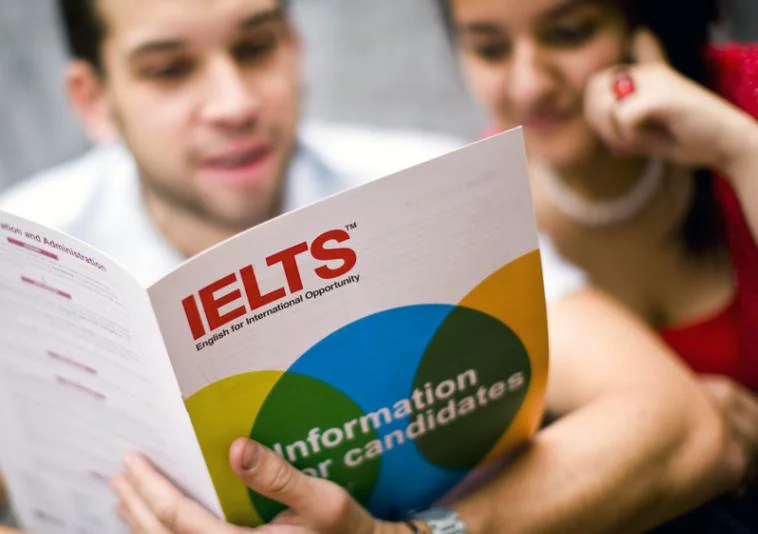
How long do i need to learn English to prepare for IELTS
How long do i need to learn English to prepare for IELTS. You’ve decided to study abroad, apply for a job overseas, or start a migration process, and somewhere in the requirements you see four letters: IELTS. The next question comes immediately: how long do I need to learn English to prepare for IELTS?
The honest answer is that it depends. Your current English level matters, and so does the band score you need and how many hours a week you can study. A learner who already speaks confident English might need only a few weeks of focused exam practice. A beginner aiming for a high score may need a year or more. This guide gives you realistic timelines based on your starting point and target score, so you can plan properly, book your test at the right time, and avoid paying for a test before you’re ready.
At KCI Institute (Kenlink Institute) in Kampala, we help learners across Africa build the strong English foundation that IELTS success depends on. Here’s how to work out your own timeline.
What Is IELTS?
IELTS (International English Language Testing System) is one of the world’s most widely recognised English language tests. It is accepted by universities, employers, professional bodies, and immigration authorities in the UK, Australia, Canada, New Zealand, Ireland, and many other countries.
There are two main versions:
- IELTS Academic: For university and college admission and some professional registrations, such as nursing and medicine.
- IELTS General Training: For work, training programmes, secondary school, and migration to countries such as Canada, Australia, and New Zealand.
Both versions test four skills:
- Listening: about 30 minutes
- Reading: about 60 minutes
- Writing: about 60 minutes
- Speaking: about 11–14 minutes, face to face with an examiner
Each skill is scored from band 0 to band 9, and you receive an overall band score. In Uganda, IELTS is delivered through official test partners. Find details on British Council IELTS and IDP IELTS.
Step 1: Find Out What Band Score You Need
Before you can estimate how long to prepare, you need to know your target score. Requirements vary widely:
- Undergraduate university admission: Often around 6.0–6.5 overall
- Postgraduate (Master’s) admission: Often around 6.5–7.0 overall
- Nursing, medicine, and healthcare registration: Often 7.0 or higher, sometimes with minimum scores in each skill
- Skilled work and migration: Varies by country and programme, from moderate scores to high scores for extra points
- Some work or family visas: May require a lower level
Always check the exact requirement with your university, employer, professional body, or immigration authority. For example, see official guidance from the UK government on approved English tests or Immigration, Refugees and Citizenship Canada. Note whether you need a minimum score in each skill as well as overall, because a low Writing score can hold you back even if your overall score is high.
Step 2: Know Your Current English Level
Your starting level is the biggest factor in how long you’ll need. Many schools and exam boards describe English ability using the Common European Framework of Reference (CEFR). Here’s a rough guide to how CEFR levels relate to IELTS bands:
- A1–A2 (Beginner to Elementary): Below about IELTS 4.0
- B1 (Intermediate): Roughly IELTS 4.0–5.0
- B2 (Upper Intermediate): Roughly IELTS 5.5–6.5
- C1 (Advanced): Roughly IELTS 7.0–8.0
- C2 (Proficient): Roughly IELTS 8.5–9.0
These are approximate comparisons, not official conversions. To find your level, you can:
- Take a free online level test, such as those offered by Cambridge English
- Try official IELTS practice tests under timed conditions
- Take a placement assessment at a language school such as KCI Institute
How Long Does It Take to Prepare for IELTS? Realistic Timelines
Here are realistic estimates based on regular study of roughly 10–15 hours per week, combining classes and self-study. Everyone learns differently, so treat these as guides, not guarantees.
If you are already Advanced (C1) and need 6.5–7.0:
About 2–6 weeks of focused exam preparation. Your English is strong. You mainly need to learn the test format, question types, timing, and strategies, especially for Writing and Speaking.
If you are Upper Intermediate (B2) and need 6.0–6.5:
About 1–3 months. You’ll combine exam technique with targeted improvement in grammar accuracy, vocabulary range, and writing structure.
If you are Upper Intermediate (B2) and need 7.0+:
About 3–6 months or more. Moving into the 7.0+ range requires real improvement in fluency, accuracy, and academic vocabulary, not just test tactics.
If you are Intermediate (B1) and need 5.5–6.5:
About 4–9 months. You’ll need to build general English to B2 level while gradually introducing IELTS practice.
If you are Elementary (A2) and need 6.0–6.5:
About 9–15 months or more. Focus first on a structured general English course, then add IELTS preparation once you reach intermediate level.
If you are a Beginner (A1) and need 6.5+:
About 12–24 months or more. Start with foundation English and progress level by level. It’s a longer journey, but very achievable with consistent effort.
How Many Study Hours Does It Take to Improve Your IELTS Band?
A commonly quoted estimate in the English teaching world is that improving by one full IELTS band can take somewhere around 150–200 hours or more of dedicated study, depending on the learner and the level. Moving between higher bands, such as from 6.5 to 7.5, is generally harder than moving between lower bands.
Cambridge English’s guidance on the CEFR suggests that each level takes a few hundred guided learning hours to complete, plus independent practice. In practical terms:
- 5 hours per week: Progress is slow, and one band may take 8–10 months or more.
- 10 hours per week: One band may take around 4–5 months.
- 20 hours per week: One band may take around 2–3 months.
The key lesson: consistent, focused hours matter more than calendar months.
Factors That Affect How Long You’ll Need
- Starting level: The further you are from your target band, the longer it takes.
- Target score: Higher bands require disproportionately more work.
- Study time per week: More regular hours mean faster progress.
- Quality of study: Structured lessons with feedback beat random practice.
- Weakest skill: Many African learners are strong in Speaking and Listening but need more work on Writing. Your weakest skill often decides your timeline.
- Exposure to English: Living or working in an English-speaking environment, as in Uganda, Kenya, or Nigeria, helps.
- Familiarity with the test: Knowing question types and timing can add half a band or more.
- Motivation and consistency: Daily practice beats occasional long sessions.
Two Stages: Build Your English, Then Prepare for the Test
One of the biggest mistakes IELTS candidates make is jumping straight into exam practice before their general English is strong enough. It’s like practising penalty kicks before you can run.
Stage 1: Build general English (if you’re below B2).
Focus on grammar, vocabulary, pronunciation, reading, listening, and writing through a structured course. At KCI Institute, our English language course runs across three levels of three months each, taking learners from foundation to confident communication.
Stage 2: Focused IELTS preparation (once you’re around B2).
Learn the test format, practise each question type, work on timing, write practice essays with feedback, and take full mock tests.
Learners who follow this two-stage approach usually reach their target faster and with less frustration than those who repeat practice tests without improving their underlying English.
A Sample 12-Week IELTS Preparation Plan
This plan suits a learner at around B2 level aiming for 6.0–6.5, studying about 10–15 hours per week.
Weeks 1–2: Understand the test
- Learn the format of all four sections.
- Take a full diagnostic practice test to find your starting band in each skill.
- Identify your weakest skill.
Weeks 3–6: Build skills and strategies
- Listening: Daily practice with podcasts, news, and IELTS listening tasks.
- Reading: Practise skimming, scanning, and timed reading passages.
- Writing: Learn Task 1 and Task 2 structures, and write at least two essays a week.
- Speaking: Practise Part 1, 2, and 3 questions, and record yourself.
- Build topic vocabulary for education, technology, environment, health, and work.
Weeks 7–10: Targeted improvement
- Focus extra time on your weakest skill.
- Get teacher feedback on Writing and Speaking.
- Review grammar errors and keep an error log.
- Take one timed section test each week.
Weeks 11–12: Mock tests and final review
- Take full practice tests under real exam conditions.
- Review mistakes carefully.
- Rest well before test day.
Free official practice materials are available from IELTS.org, British Council IELTS, and IDP IELTS.
Can You Prepare for IELTS in One Month?
Yes, if your English is already strong, around B2–C1 level. In one month, you can:
- Master the test format and question types
- Learn time management strategies
- Practise writing tasks with feedback
- Improve speaking confidence
- Take several full mock tests
If your English is at B1 or below, one month is usually not enough to reach 6.0 or higher. Trying to rush can lead to a disappointing score and the cost of retaking the test. It’s better to invest time in building your English first.
How to Prepare Faster: Proven Tips
- Study every day, even for 30–60 minutes.
- Focus on your weakest skill, which is often Writing.
- Get feedback. Self-study helps, but teachers spot errors you can’t see.
- Read widely: newspapers, magazines, and articles on academic topics.
- Listen actively to English podcasts, lectures, and news, and take notes.
- Speak English daily with friends, colleagues, or study partners.
- Learn vocabulary in context rather than memorising long lists.
- Practise under time pressure. IELTS is as much about speed as accuracy.
- Use official materials so your practice matches the real test.
- Use free resources such as the British Council’s LearnEnglish website.
- Keep an error log and review it weekly.
Learning English Online for IELTS in Africa
You don’t need to live in a big city to prepare for IELTS. Online learning lets you study from anywhere in Africa, at times that suit your schedule. KCI Institute offers morning, afternoon, full-day, weekend, and online study options, so working professionals and students can build their English without disrupting their lives.
Read more about flexible learning in our guides to studying online in Uganda, the best online courses in Uganda, and online training institutes in Uganda. If you need to build your computer skills for the computer-delivered IELTS test, our computer short courses can help.
Build Your English Foundation at KCI Institute
KCI Institute has been training learners in Kampala since 2009. Our language courses include English, taught across three progressive levels:
- Level 1: 3 months, UGX 500,000
- Level 2: 3 months, UGX 500,000
- Level 3: 3 months, UGX 500,000
- Full course (9 months): UGX 1,500,000
The course develops grammar, vocabulary, pronunciation, speaking, listening, reading, and writing, which are exactly the skills IELTS measures. Many learners complete our English course to reach intermediate or upper-intermediate level, then move on to focused IELTS practice. Ask our admissions team about exam-focused support when you apply.
For full fee details, see our fee structure. Fees can change, so confirm the latest amounts with admissions. Learn more about us on our About Us page, or read our guide to language schools in Kampala.
Other Useful Resources in Uganda
- British Council Uganda: Online English courses and IELTS preparation options for learners in Uganda.
- Uganda Language School: English and other language courses with online and in-person options. Their guides to the best English schools in Uganda, the cost of studying English in Uganda, and language training in Uganda are useful for comparing options.
- Learn English Uganda: A Uganda-based resource for English learners.
English Plus Career Skills: Make Your IELTS Journey Count
If you’re preparing for IELTS to work abroad, practical skills can make your application even stronger. At KCI Institute, you can combine English with professional training:
- Tourism and hospitality: See our online tourism courses in Uganda and our tourism marketing course.
- Vocational qualifications: Browse our UVTAB courses, assessed by the Uganda Vocational and Technical Assessment Board.
- All programmes: Explore our full list of courses.
- Business: Learn about our business consultation services.
Common Mistakes That Slow Down IELTS Preparation
- Booking the test too early, before your practice scores reach your target
- Only doing practice tests without improving underlying English
- Ignoring Writing, which is often the lowest-scoring skill
- Memorising answers for Speaking. Examiners notice, and it lowers your score.
- Using unofficial materials that don’t match the real test
- Studying irregularly instead of consistently
- Not checking requirements, such as minimum scores in each skill
When Should You Book Your IELTS Test?
A good rule: book your test when your practice test scores consistently reach your target band, ideally slightly above it, across all four skills.
- Check test dates in your city early. Popular dates can fill up.
- Allow time for results before your application deadline. Check current result times with your test provider.
- Remember that most organisations accept IELTS results for a limited period, commonly two years.
- Choose between paper-based and computer-delivered tests, where available.
How to Start Your English and IELTS Journey with KCI Institute
- Check your target band with your university, employer, or immigration authority.
- Find your current level with a placement test.
- Explore our English programme on the language courses page.
- Read the admission requirements on our admission page.
- Apply online through our application form, choosing your preferred study mode.
- Access learning materials through the student portal once enrolled.
Questions? Call +256 789 210 067 or email info@kenlinkinstitute.ac.ug.
Frequently Asked Questions
How long do I need to learn English to prepare for IELTS?
It depends on your level and target. Advanced learners may need 2–6 weeks, upper-intermediate learners 1–6 months, intermediate learners 4–9 months, and beginners 12–24 months or more.
Can I prepare for IELTS in one month?
Yes, if your English is already around B2–C1 level. If you’re below that, you’ll likely need more time to build your general English first.
How many hours does it take to improve by one IELTS band?
A commonly quoted estimate is around 150–200 hours or more of focused study, depending on your level. Higher bands usually take longer.
What IELTS score do I need for university?
Many universities ask for around 6.0–6.5 for undergraduate and 6.5–7.0 for postgraduate study, but requirements vary. Always check with your chosen institution.
Should I take a general English course before IELTS preparation?
If your English is below B2 level, yes. Building a strong foundation first usually leads to faster, better IELTS results.
Which IELTS skill is hardest?
Many candidates find Writing the most challenging, followed by Speaking. Focus extra practice on your weakest skill.
Can I learn English online for IELTS in Uganda?
Yes. KCI Institute and other providers offer online English classes, and official IELTS partners provide online practice materials.
How long are IELTS results valid?
Most organisations accept IELTS results for a limited period, commonly two years. Check your target organisation’s policy.
Start Preparing for Your IELTS Success Today
So, how long do you need to learn English to prepare for IELTS? It could be a few weeks or a couple of years. What matters most is knowing your starting level, setting a clear target, and studying consistently with the right support. Build a strong English foundation first, then sharpen your exam skills, and you’ll walk into the test room with confidence.
Ready to start? Apply now for KCI Institute’s English course, online or on campus, and take the first step towards your IELTS goal. For more study tips, visit our blog.

