
What next after university?
What next after university? Graduation day feels like the finish line. You’ve spent three or four years, sometimes more, working toward a degree, and the assumption baked into the whole process is that the certificate itself is the hard part — that once you have it, the job will follow. For a growing number of Ugandan graduates, that isn’t how it plays out. You leave university with genuine knowledge, a real qualification, and often very little practical, job-ready skill to show an employer on day one. If that gap sounds familiar, you’re not alone, and there’s a clear, practical next step worth taking before you spend months sending out CVs that go nowhere.
The Uncomfortable Reality Facing Ugandan Graduates
Uganda’s graduate unemployment rate currently stands at around 15.2 percent according to the Uganda Bureau of Statistics (UBOS), a figure that sits well above overall national unemployment and reflects something specific about the transition from university to work. More striking still, the National Planning Authority has found that only about 30 percent of graduates demonstrate the competencies employers actually require. That isn’t a comment on how hard graduates worked or how capable they are — it’s a reflection of a university system built primarily around theory, exams, and academic assessment, producing graduates who understand concepts deeply but haven’t necessarily touched the practical tools, software, or workplace skills their first job will demand of them immediately.
Why a Degree Alone Often Isn’t Enough Anymore
Employers across Uganda consistently report the same complaint: graduates arrive with strong academic records but struggle with the practical, day-to-day competencies the job actually requires — using specific software confidently, communicating professionally in writing and in person, managing basic administrative tasks, or simply operating with the kind of hands-on capability that only comes from doing the work, not reading about it. This isn’t a uniquely Ugandan problem, but it’s a particularly pressing one here, given how many graduates are entering a labour market that isn’t growing formal jobs quickly enough to absorb them on theoretical qualifications alone. The practical takeaway is straightforward: a degree gets you shortlisted less often than it should, and a short, focused, practical qualification on top of it is often what actually gets you hired.
The Case for a Short Practical Course After University
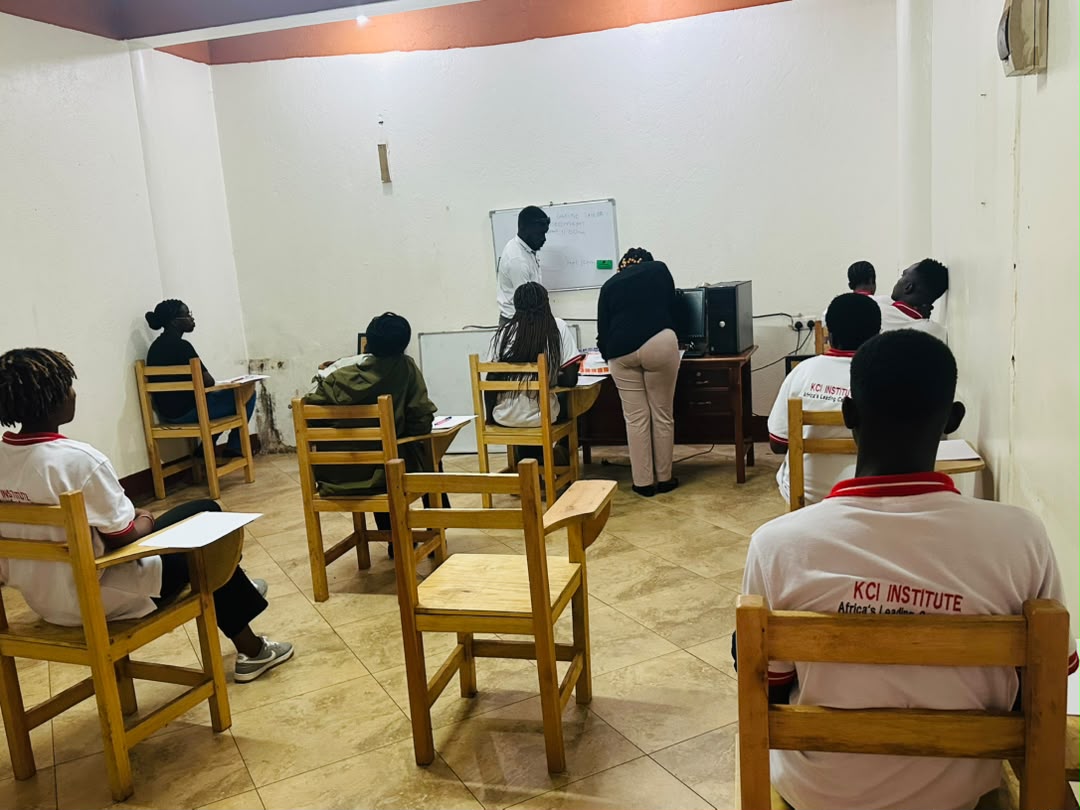
This is exactly the gap short, practical courses are designed to close, and it’s why so many university graduates are now returning to institutes like KCI Institute after graduation rather than treating their degree as the final stop. A short practical course doesn’t replace your degree or waste the years you already invested — it adds the specific, demonstrable, job-ready skill that turns your qualification into something an employer can actually picture you using from your first week on the job. And because these courses run weeks to months rather than years, you can close that gap quickly, without stalling your career any further while you wait for the right opportunity to somehow appear.
Which Short Courses Actually Move the Needle
Not every add-on skill carries equal weight, but a handful consistently make the biggest difference for university graduates specifically. A Digital Marketing short course equips graduates with the social media, online advertising, and content skills that almost every modern employer now expects, regardless of the department you’re hired into. A Certificate in Computer Skills and Secretarial training builds the everyday administrative and IT competence that many degree programes simply never touch directly. Human Resource Management and Business Administration short courses give graduates from unrelated academic backgrounds — arts, sciences, social studies — a practical route into the business functions that hire consistently across every industry. And for graduates specifically drawn to Uganda’s tourism and hospitality boom, targeted short courses in tours and travel management or hotel operations translate academic credentials into an entirely new, fast-growing career path.
Why Practical Training Works Faster Than You’d Expect
One of the most common hesitations graduates have is the fear of “going back to school” after already finishing a demanding degree. Short practical courses are built entirely differently from that experience. Programmes typically run a matter of weeks to a few months rather than years, are structured around hands-on, practical instruction rather than lecture-heavy theory, and are taught by instructors with genuine industry experience who focus on exactly the skills employers are asking for right now. You’re not repeating your education — you’re finishing it, in the specific place where your degree left off.
Turning a Short Course Into an Actual Job
A certificate on its own is still just a piece of paper unless it’s connected to real employment support. This is where the right institute matters as much as the right course. At KCI Institute, practical training is paired with genuine business consultation and career support, helping graduates translate their new skills into actual job applications, interviews, and, for those with entrepreneurial ambitions, the foundation to start something of their own rather than waiting indefinitely for someone else to hire them. In a labour market where the National Planning Authority itself is actively pushing universities and training institutions to build stronger links with industry, this kind of direct, practical support is exactly what closes the gap between a certificate and a career.
Who Should Seriously Consider This Route
If you graduated within the last one to two years and are still searching for your first real job, if you’re currently in a role that doesn’t match your qualifications or ambitions, or if you’ve noticed that job listings in your field consistently ask for specific practical skills your degree never covered, a short practical course is worth serious consideration right now rather than something to think about later. The longer the gap between graduation and meaningful employment stretches, the harder it can become to close — acting on this now, while your degree is still recent and your motivation is high, puts you in a considerably stronger position than waiting.
What to Look for in a Post-University Short Course
Whichever specific skill you choose, look for a course built around genuine hands-on practice rather than more theory, instructors with real industry experience, flexible scheduling that respects the fact you may already be working or job-hunting, and some form of career or job placement support built into the programme rather than a certificate handed over with no further guidance. These are exactly the standards KCI Institute has built its reputation around, and they’re the difference between a course that simply adds a line to your CV and one that genuinely changes your employment prospects.
Your Degree Was the First Step, Not the Whole Journey
Finishing university is a genuine achievement, and nothing about taking a short practical course afterward diminishes that. What it does is recognise an honest truth about Uganda’s current labour market: a degree demonstrates that you can learn, but employers are increasingly hiring for proof that you can also do. Closing that gap doesn’t require starting over — it requires one focused, practical step in the right direction.
Apply now to enrol in a short practical course at KCI Institute, and turn your degree into the career it was always meant to lead to. Speak with our admissions team about which course best complements your academic background, check our fee structure for full pricing, or explore our complete range of courses to see every practical skill on offer. The sooner you take this next step, the sooner your degree starts working for you the way you always expected it to.

