
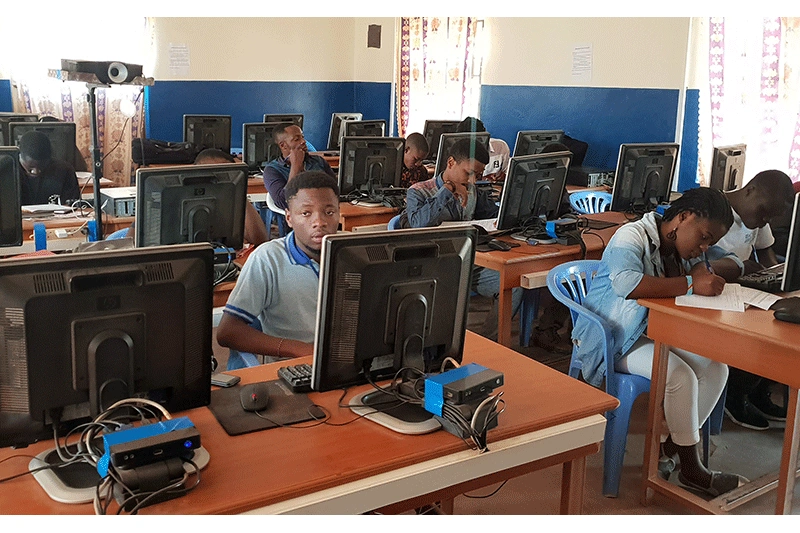
Best ICT or Computer Courses in Uganda
Best ICT or Computer Courses in Uganda. Uganda’s economy is digitizing faster than most people realize. Mobile money, e-government services, online banking, and remote work for international companies have all turned basic computer literacy into a baseline requirement rather than a bonus skill. For anyone serious about a career in tech, or simply trying to stay competitive in today’s job market, the question is no longer whether to study ICT, but where to get training that is practical enough to actually use. KCI Institute has built its entire ICT department around that exact need, and below is a closer look at what is on offer.
Why ICT Skills Matter More Than Ever in Uganda
Government agencies are moving services online, banks are competing on digital platforms, and small businesses increasingly run on tools like mobile point-of-sale systems, social media marketing, and cloud-based accounting. That shift has created strong demand for people who can do more than just browse the internet: network technicians, web developers, graphic and multimedia designers, database administrators, and digital marketers are all in short supply relative to demand. KCI Institute was designed with this gap in mind, offering training that takes learners from zero experience to job-ready skills without the multi-year commitment of a university degree.
ICT and Computer Courses Offered at KCI Institute
KCI’s full course catalogue includes several ICT pathways, each built for a different starting point and career goal.
Computer Skills / Secretarial (3 Months)
This is the natural starting point for complete beginners. The course covers operating systems, Microsoft Office (Word, Excel, PowerPoint, and Access), internet use, and email communication. It is especially popular with students preparing for office jobs, entrepreneurs who need to manage their own records and correspondence, and anyone who simply wants to stop feeling lost around a computer. Because it only takes three months, it is also a common first step before moving into one of KCI’s more advanced ICT programs.
ICT / Web Designing (4 Months or One Year)
For learners who want a more technical and creative skill set, the ICT/Web Designing course teaches how to build responsive websites using HTML, CSS, JavaScript, and content management systems such as WordPress. It is available as a fast 4-month short course or as a more in-depth one-year program for students who want extra time to build a stronger portfolio. KCI has a dedicated breakdown of this program on its website designing course page, which is worth reading if web development is your main interest. Graduates typically move into freelance web design, junior developer roles, or building websites for their own businesses.
Digital Marketing (4 Months)
Digital Marketing pairs naturally with the web design course, and many students take both. This program covers social media marketing, search engine basics, content creation, and the practical side of running paid and organic campaigns for a business. It is well suited to small business owners, marketing assistants, and anyone who wants to manage a brand’s online presence professionally rather than informally.
National Certificate in ICT (Two Years)
Students who want a deeper, more comprehensive ICT qualification can enrol in the two-year National Certificate in ICT. This program goes beyond the short courses to cover networking fundamentals, systems administration basics, and broader applications training, giving graduates a more rounded credential that is recognized by employers looking for staff with sustained, structured ICT training rather than a single narrow skill.
Specialized ICT Short Courses
Beyond the core programs, KCI also runs a set of focused short courses for learners who already have computer basics down and want to specialize. These include Networking Essentials, covering local area network setup, troubleshooting, and basic security protocols; Cybersecurity Fundamentals, which introduces vulnerability identification and basic protective measures for digital assets; Graphics and Multimedia Design, built around tools like Adobe Photoshop and Illustrator for branding and visual content; and Data Analytics, which introduces data interpretation and reporting using tools such as Excel. These shorter, focused tracks are ideal for students who want to add a specific, in-demand skill to a CV without committing to a full new course.
Why Choose KCI Institute for ICT Training
A few things set KCI apart as an ICT training destination in Uganda. Trainers bring real industry experience rather than purely academic backgrounds, and the curriculum is reviewed regularly to keep pace with what employers are actually asking for. Classes lean heavily on hands-on labs and real projects instead of long lecture sessions, and the institute offers flexible study options, including full-time, part-time, evening, and online classes, so that working adults and students with other commitments can still complete a program. Fees are also kept competitive relative to the value delivered, and certificates issued on completion are recognized by employers across Uganda.
Admission Requirements
Getting started at KCI Institute is straightforward. For both short courses and the one to two year programs, applicants need a modest admission fee, any available academic documents, a national ID or passport, and two passport photos. Full details are available on the admission page, and you can read more about the institute’s background and mission on the About Us page.
Career Paths After Studying ICT at KCI
Graduates of KCI’s ICT programs go on to a wide range of roles. Some become freelance web designers or digital marketing consultants, building client bases of their own. Others move into office administration, IT support, or junior technician roles within companies that need someone to manage day-to-day computer systems. Students who complete the National Certificate in ICT often find stronger footing in network administration or systems support roles, while those who specialize in graphics or data analytics frequently move into creative agencies, communications teams, or business analysis support functions. Because the training is practical from day one, many graduates are able to start earning, whether through formal employment or freelance work, almost immediately after completing their course.
Start Building Your ICT Skills Today
Uganda’s digital economy needs skilled people now, not in four years. If you want practical, job-ready computer and ICT training that gets you working with real tools from your very first weeks of class, explore the full ICT and computer course offerings at KCI Institute and take the next step toward a tech career. You can apply online today or reach out through the About Us page to learn more about studying ICT at KCI.

