
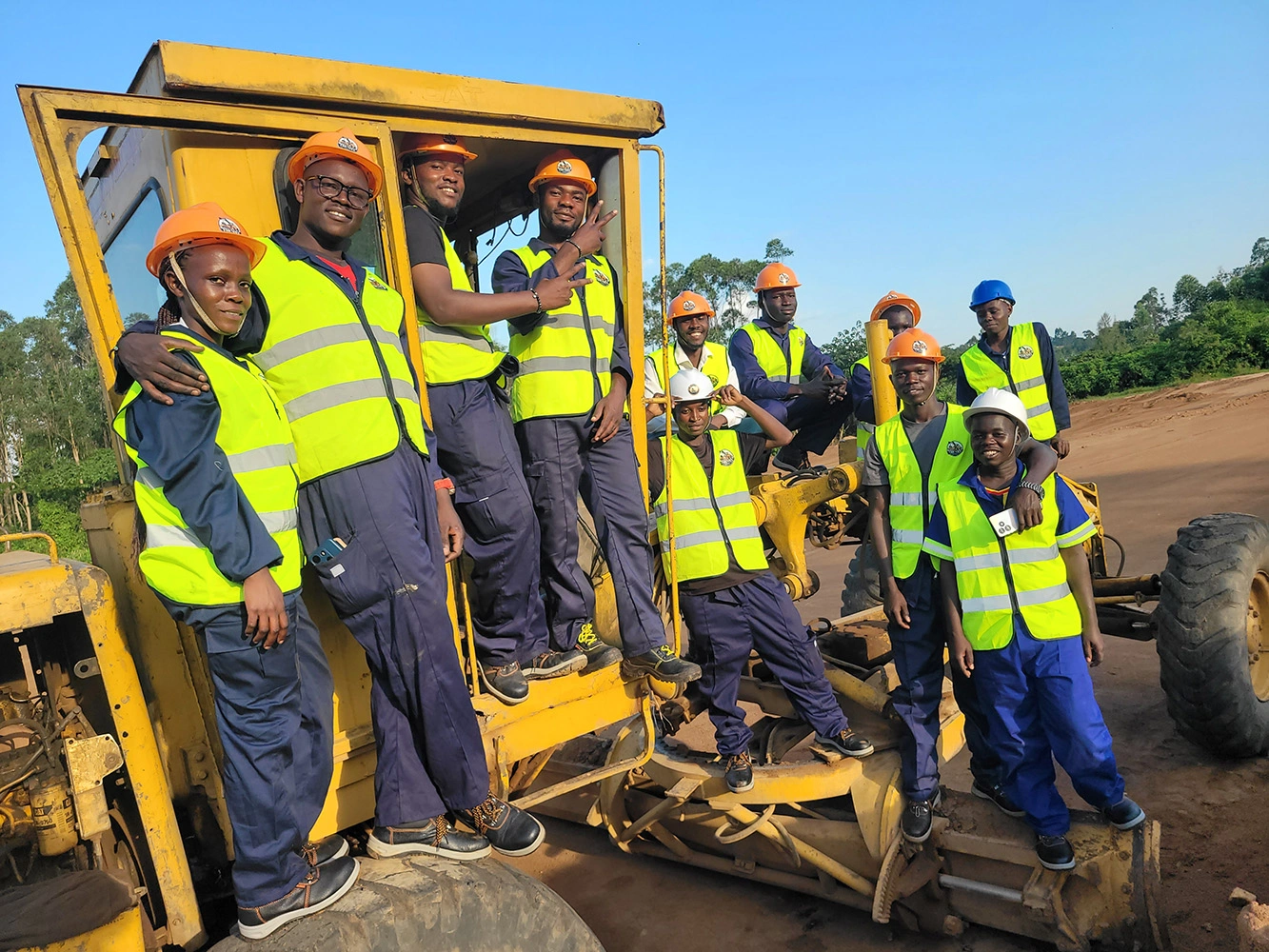
Heavy Machinery Mechanics Training in Uganda
Heavy Machinery Mechanics Training in Uganda. Uganda’s construction, mining, transport, and agricultural sectors are powered by heavy machinery. Excavators, bulldozers, graders, cranes, dump trucks, and dozens of other machines are at work across the country every single day — moving earth, lifting loads, building roads, and driving the kind of infrastructure development that is transforming Uganda from the ground up. But here is something that often goes unnoticed — for every machine that is operating on a site, there is a mechanic somewhere ensuring that it continues to run.
Heavy machinery mechanics are among the most valuable and consistently in-demand professionals in Uganda’s technical workforce. While operators get the machine moving, mechanics keep it alive. And at KCI Institute in Kampala, we train both — giving Uganda’s workforce the complete technical talent it needs to keep the country’s development engine running.
If you are considering a career in heavy machinery mechanics, this guide is for you. We will walk you through what the career involves, why it is one of the best technical paths available in Uganda today, and how our training programs can get you there.
What Does a Heavy Machinery Mechanic Do?
A heavy machinery mechanic is a technical professional responsible for the inspection, maintenance, repair, and overhaul of large construction and industrial equipment. This includes diagnosing mechanical and electrical faults, replacing worn or damaged components, servicing engines and hydraulic systems, carrying out scheduled preventive maintenance, and ensuring that machines meet safety and performance standards before they return to operation.
On a busy construction site, a machine that breaks down is not just an inconvenience — it is a costly disruption that can delay entire projects and result in significant financial losses for contractors. This is precisely why skilled mechanics are so highly valued. A mechanic who can accurately diagnose a fault and get a machine back in operation quickly is worth more to a site manager than almost any other technical professional on the team.
The career spans multiple specialisations. Some mechanics focus on petrol engine systems, others on diesel engines, and others on hydraulic and pneumatic systems — all of which are essential to the operation of modern heavy machinery. At our institute, we offer dedicated training in each of these areas, preparing students for the full range of mechanical roles available in Uganda’s growing construction and industrial sectors.
Why Heavy Machinery Mechanics Are in High Demand in Uganda
Uganda’s infrastructure investment is not slowing down. Government road construction programs, large-scale real estate development, expanding mining operations, and agricultural mechanisation projects are all creating sustained demand for heavy equipment — and by extension, for the mechanics who maintain and repair it.
The Uganda Vocational Training and Apprenticeship Board (UVTAB) has identified mechanical and technical skills as a priority area within Uganda’s national vocational training framework, reflecting the growing recognition that the country’s development goals cannot be achieved without a strong pipeline of qualified technical professionals.
Additionally, the Directorate of Occupational Safety and Health (DOSH) requires that heavy equipment used on formal worksites meets defined safety and maintenance standards. This creates a regulatory environment in which qualified mechanics are not just desirable — they are essential. Employers cannot afford to run fleets of heavy equipment without competent mechanics to keep them roadworthy, safe, and compliant.
For individuals looking for a career that combines job security, strong earning potential, and genuine technical challenge, heavy machinery mechanics is one of the most compelling vocational paths available in Uganda today.
Our Heavy Machinery Mechanics Training Programs
At KCI Institute, we offer three dedicated mechanics training programs, each designed to deliver deep, practical competence in a specific area of heavy machinery systems. All three programs are available to Ugandan nationals and international students, with clearly structured fees and flexible enrollment timelines.
Petrol Engine Mechanics — This eight-week program covers the fundamentals of petrol-powered engine systems, including engine components, ignition systems, fuel systems, cooling systems, and emission controls. Students learn to diagnose faults, carry out repairs, and perform scheduled servicing on petrol engines used in a range of machinery and vehicles. The program is ideal for students who want a broad mechanical foundation that applies across multiple equipment types.
Diesel Engine Mechanics — Also running for eight weeks, our diesel engine mechanics program is one of our most popular and most career-relevant offerings. Diesel engines power the vast majority of heavy construction equipment in Uganda — excavators, bulldozers, graders, dump trucks, generators, and more. This program equips students with a thorough understanding of diesel engine systems, including fuel injection, turbocharging, cooling, lubrication, and exhaust systems. Graduates are prepared to work as mechanics on construction sites, in equipment workshops, and with transport companies operating large diesel-powered fleets.
Hydraulic Systems — This five-week program focuses on the hydraulic systems that are central to the operation of most heavy construction equipment. Excavators, cranes, forklifts, and bulldozers all rely on hydraulic power to perform their core functions, and a mechanic who understands how to diagnose and repair hydraulic faults is exceptionally valuable in the field. The program covers hydraulic principles, pump and motor systems, control valves, cylinders, filtration, and common fault diagnosis techniques.
Full details of all three programs, including fees for nationals and international students, are available on our Heavy Machinery Training Page.
Hands-On Training That Builds Real Competence
At our institute, we do not believe in teaching mechanics from a distance. Our training philosophy is built around maximum practical engagement — students work directly with real engines, real hydraulic systems, and real machinery components throughout their programs. This is not a theoretical course with occasional demonstrations. It is an immersive, workshop-based learning experience designed to build the kind of muscle memory, diagnostic instinct, and technical confidence that only comes from actually doing the work.
Our instructors are experienced mechanical professionals who have worked in the field and understand the real challenges that mechanics face on active construction sites and in busy equipment workshops. They bring that experience into every lesson, helping students not just understand how systems work in theory, but how to deal with them in practice — under pressure, in the field, with real consequences riding on getting it right.
The National Curriculum Development Centre (NCDC) recognises vocational and technical training as a critical and respected pathway within Uganda’s national education framework, and our programs are structured to reflect the standards and outcomes that this framework requires.
Who Should Consider Heavy Machinery Mechanics Training
Our mechanics programs are suited to a wide range of applicants. If you are a school leaver — whether from S4 or S6 — looking for a practical career path that leads quickly to employment, our mechanics programs are an excellent choice. If you are already working in or around the construction industry and want to formalise and deepen your technical knowledge, our programs will give you the structured training and recognised certification that takes your career to the next level.
International students from across East Africa who are looking for quality, affordable mechanical training in a practical environment are also very welcome at our institute. We have a clear and fair fee structure for international applicants and our admissions team is always on hand to guide prospective students through the enrollment process.
There is no requirement for prior mechanical experience to join our programs. We build competence from the ground up, and our instructors are skilled at working with complete beginners as well as students who already have some exposure to mechanical work.
A Career That Goes Where the Work Is
One of the most appealing aspects of a career in heavy machinery mechanics is its portability. Qualified mechanics are needed wherever heavy equipment is being used — and in Uganda, that means construction sites, mining operations, agricultural estates, transport companies, equipment hire businesses, and government infrastructure projects spread across every region of the country.
Beyond Uganda, the demand for qualified heavy machinery mechanics extends across the East African region and into international markets. A recognised certification from our institute, combined with genuine hands-on competence, positions our graduates to pursue opportunities both locally and abroad — giving them a career that grows with them wherever life takes them.
Apply Today and Start Building Your Technical Future
Uganda needs mechanics. The machines are here, the construction projects are here, and the opportunities are here — what the industry needs is more qualified, certified, and practically trained professionals to keep everything running.
We are ready to train you. Explore our full range of mechanics and heavy machinery programs on our Heavy Machinery Training Page, and when you are ready to take the next step, submit your application through our Application Page.

