
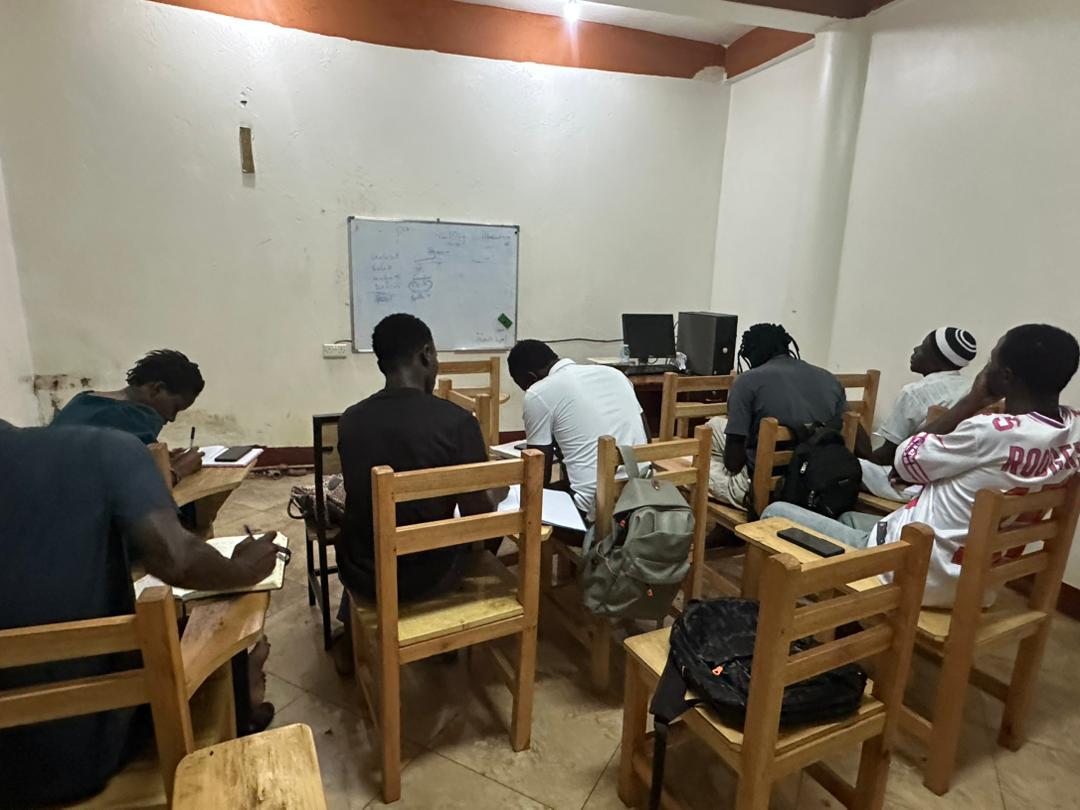
Studying English in Africa online
Studying English in Africa online. English opens doors across Africa. It is an official language in around two dozen African countries, the working language of many international businesses, universities and organization’s, and the language of most global websites, courses and job listings. For a student in Kampala, Lagos, Kigali, Nairobi, Kinshasa or Dakar, better English can mean a stronger CV, a scholarship application, a promotion or a place on a course abroad. And you no longer have to travel to a classroom to get there.
Online learning has changed the picture. With a phone or laptop and a reasonable connection, you can join live classes, watch recorded lessons, submit assignments and speak with a teacher, all without leaving home. This guide explains how studying English online in Africa works, what to look for, how to cope with data costs and power cuts, how to prepare for exams and how to combine online study with in-person classes. If you are ready to look at a real programme, Kenlink Institute offers online courses in Uganda, and its language team can advise you on English options.
Why Study English Online in Africa?
Flexibility is the first reason. Many African learners work, care for family or study another subject, and cannot attend a fixed daytime class. Online lessons let you study early in the morning, in the evening or on weekends, and you can review recordings when you miss a session. That flexibility makes it easier to stay consistent, which matters more than anything else in language learning.
Access is the second reason. If the best English teachers or courses are in a city hundreds of kilometres away, online study brings them to you. Learners in small towns and rural areas who could never relocate can now join the same classes as students in the capital. Cost is the third reason: online courses often reduce spending on transport, accommodation and materials, and some schools price them below in-person classes.
Finally, online study builds skills that employers value. Managing your time, using digital tools and communicating on video calls are part of modern work, and you practise all three while you learn English. For many students, that combination of language and digital confidence is as valuable as the certificate itself.
The Reality of Online Learning in Africa: Data, Devices and Power
Online study is powerful, but it is not free of challenges, and it helps to plan for them. According to the GSMA, about 37 percent of Africa’s population was using mobile internet in 2025, and the organisation highlights device affordability, digital skills and the cost of data as key barriers. In other words, coverage often exists, but many people cannot use it easily. If data is expensive for you, your study plan needs to respect that.
Start with the basics. A smartphone can be enough for many lessons, though a laptop or tablet is more comfortable for writing and long sessions. Use headphones with a microphone so you can hear clearly and be heard. Charge your devices before class, keep a power bank handy and, if power cuts are common, choose a schedule that avoids the hours when outages usually happen. A simple backup plan, such as a mobile hotspot or a nearby internet cafe, can save an important lesson.
Data costs can be managed. Download videos and reading materials when you are on Wi-Fi, turn off video when you only need audio, lower the video quality on recordings and close other apps during class. Ask your school whether lessons can be downloaded, whether audio-only participation is allowed and whether it provides lightweight materials. Schools that understand these constraints are much easier to learn with.
Types of Online English Study: Which One Suits You?
Live online classes. A teacher and a group of students meet at a fixed time on video. You get instant feedback, speaking practice and the motivation of a group. This format is closest to a classroom and is usually the best choice for speaking and listening.
Self-paced courses. You watch recorded lessons and complete exercises when it suits you. This is ideal for busy or irregular schedules, but it needs self-discipline and works best when combined with live speaking practice.
One-to-one tutoring. A private teacher works on your exact goals, such as interview practice or exam preparation. It is flexible and effective, though usually more expensive per hour.
Apps and free resources. Language apps, radio, podcasts and videos are excellent for daily practice, but they rarely replace structured teaching. Treat them as helpers, not as your only method.
Blended learning. Many learners mix online and in-person study, starting online and later joining classes on campus. Kenlink Institute describes this approach, letting students move between online and in-person instruction depending on their schedule. You can see the wider range of programmes on the Kenlink Institute courses page.
How to Choose a Good Online English Course: A Checklist
Not all online courses are equal, and a little checking protects your time and money. Look for a school that clearly describes its levels, weekly hours and learning outcomes. Check whether it offers live classes with a real teacher, not only recorded videos. Ask about class size, teacher experience, feedback on speaking and writing and how progress is measured.
Look for a placement process that puts you in the right level, and for a certificate or assessment at the end. Confirm the price and everything it includes, and pay only through official channels. Be careful with offers that promise fluency in a few weeks, that ask for full payment before giving any information or that cannot be found on a proper website. A legitimate school will have contact details, a physical address and clear admission steps.
It also helps to compare schools. This overview of language training in Uganda shows one provider’s approach, and this guide to the best language schools in Uganda is a useful starting point when you build a shortlist. Then compare what each school publishes with what it tells you directly.
Online Learning at Kenlink Institute
Kenlink Institute is a training institution in Kampala, Uganda, at Plot 149, Dolphin Plaza, Gayaza Road, Mulago Kubiri. Its language programme includes English, and applicants can choose an online session when they apply, alongside morning, afternoon, full-day and weekend options. You can read about its language offering on the language courses page, and the overview of language schools in Kampala explains how its English classes cover communication, grammar, writing and spoken English for all proficiency levels.
The institute describes its online study as flexible, with video tutorials, live classes, assignments and continuous feedback, and it says students can move between online and in-person learning as their schedule changes. That is helpful for African learners who begin from home and later decide to study in Kampala. To learn more about the school itself, visit the Kenlink Institute About Us page.
How Long Does It Take to Study English Online?
Online study follows the same rules as classroom study: your progress depends on the number of guided hours and how regularly you practise. Cambridge English guidance suggests roughly two hundred guided learning hours to move from one level of the Common European Framework of Reference (CEFR) to the next, and total hours from a complete beginner are about 90 to 100 for A1, 180 to 200 for A2, 350 to 400 for B1, 500 to 600 for B2 and 700 to 800 for C1. These are guidelines, not promises, but they make planning easy.
| Weekly guided study | Approximate time to reach B1 from A1 | Approximate time to reach B2 from B1 |
|---|---|---|
| 5 hours a week | About 50 to 60 weeks | About 30 to 40 weeks |
| 10 hours a week | About 25 to 30 weeks | About 15 to 20 weeks |
| 15 hours a week | About 17 to 20 weeks | About 10 to 14 weeks |
If you are studying around a job or school, five to ten hours a week is realistic, and it still delivers steady progress over a year. To see how another language is described by a Ugandan provider, you can read this article on how long it takes to study German in Uganda, which shows how learning time varies from one language to another.
A Sample Weekly Online Study Plan
A good plan mixes live lessons with short daily practice. Here is a simple example for a learner with about ten hours a week. On Monday and Wednesday evenings, join a live class of ninety minutes. On Tuesday and Thursday, spend forty-five minutes on the assignments from class. On Friday, do a thirty-minute speaking session with a partner or teacher. On Saturday, watch or listen to English content for an hour, then write five sentences about what you learned. On Sunday, review your notes for thirty minutes and plan the week ahead.
Adjust the plan to your reality. If data is limited, put video-heavy tasks on days when you have Wi-Fi and keep reading, vocabulary and writing for other days. If your electricity is unreliable, do the tasks that need a laptop in the hours when power is stable and use your phone for audio practice. What matters is that the plan is realistic enough for you to repeat every week.
How to Practise Speaking English Online
Speaking is where online learners most often fall behind, because it is easy to watch videos and difficult to talk. Make it a rule to speak every day. Join classes that give you real speaking time, and prefer small groups over large webinars. Ask your teacher for feedback on pronunciation, and record short voice notes of yourself so you can hear your progress.
Find a speaking partner, whether a classmate, a friend or a study group on a messaging app, and agree on a topic for each call. Describe your day, explain a process from your job or debate a simple question. Do not wait until your English is perfect. Mistakes are useful, because they show you what to study next, and each conversation builds the confidence you need for work, exams and travel.
Exams and Tests You Can Prepare for Online
Many learners study English to pass an exam. Some tests can even be taken from home. For example, ETS offers the TOEFL iBT Home Edition, which requires a computer with a webcam and microphone, a quiet private room and a stable connection, and it is accepted by institutions in more than 160 countries. IELTS and other tests are also widely used, though the format and location options vary. Before you begin, check exactly which test your university, employer or immigration office accepts and what score you need, because requirements change.
Once you know your target, ask your school whether it can help you prepare. Good exam preparation includes practice tests, timed writing, speaking rehearsals and feedback. Even if you do not plan to take an external exam, a school-based assessment at the end of a course gives you a clear picture of your level. You can read about the range of programmes and assessments at Kenlink Institute on its language courses page.
Certificates and Recognition
A certificate matters when you want to prove your skills to an employer or a school. Kenlink Institute describes its programmes as leading to recognised certification, and you can confirm the exact certificate for your English course when you speak to the admissions team. Ask what the certificate says, which level it states and whether it is accompanied by a transcript or assessment result. For an official score, such as for a visa or a foreign university, remember that an independent exam is often required.
Start Online, Then Study in Uganda: The Blended Route
One of the best strategies for African learners is to start online and then continue in person. You build habits, learn the basics and improve your confidence from home, and you may save money and time on tuition. When you are ready, you can join classes on campus in Kampala and take advantage of daily immersion in a city where English is the official language. Kenlink Institute states that students can switch between online and in-person learning, and you can see more about how to move ahead on the admission page.
If you decide to travel, learn the paperwork early. Foreign nationals enrolled in a learning institution in Uganda are generally expected to hold a student pass, which is issued for three, six or twelve months, and East African nationals are exempt. You will normally need a passport valid for at least six months, a photograph, an admission letter, a school support letter and proof of fee payment. Uganda also asks arriving travellers for a yellow fever vaccination certificate. Rules change, so confirm everything on the official immigration website before you book flights.
French and German: Learning More Than One Language
Africa is a multilingual continent, and many learners add a second or third language once their English is comfortable. Learners from francophone countries, such as the Democratic Republic of the Congo, Rwanda, Burundi, Senegal and Cameroon, often study English to widen their job options, and English speakers sometimes add French for the same reason. To see how French is offered in Uganda, read this guide to French schools in Uganda, and if German interests you, visit the page on the German language in Uganda.
The key is to build one language at a time. Reach a comfortable level in English, then start the next one with a similar routine. Your online study skills, such as scheduling, note-taking and speaking practice, will carry over. You can also browse the best language schools in Uganda to compare what different schools offer for each language.
What Does Online English Study Cost?
Costs vary widely. Group classes are usually cheaper than private tutoring, and longer programmes often cost less per lesson than short intensive ones. Add the hidden costs when you calculate your budget: mobile data or home internet, a headset, electricity, printed materials and any exam fees. If you plan to travel later, add visa, accommodation, transport and health insurance.
Ask any school for a written breakdown of what its price includes. Kenlink Institute publishes its fees on the fee structure page, and because intakes and formats can change, confirm the current figure for online English with the admissions team before you pay. To compare what another provider says about pricing, read this guide on how much studying English in Uganda costs.
Add Practical Skills to Your English
English becomes even more powerful when it is paired with a skill. If you work in tourism or hospitality, the tourism short courses in Uganda and the tourism courses in Uganda can help you serve international guests. If you want a short, focused qualification, browse the best short courses in Uganda, and if you prefer a technical path, see the top technical and vocational courses in Uganda.
School leavers can explore the top eight courses a Senior 4 leaver can do, the guide to courses for S.4 or S.6 vacists and the list of best degree courses in Uganda. Business owners can ask about business consultation, and jobseekers can watch the job opportunities page for openings.
How to Apply for Online English at Kenlink Institute
The process is simple. First, decide on your goal and level, and gather your questions about schedule, price and format. Second, complete the online form on the application page and choose the online session. Third, wait for the team to review your application, which the institute says usually takes about two working days. Fourth, take a placement test or short interview if requested, confirm your level and start classes. If you would like advice first, call +256 200 955 001 or +256 789 210 067, or write to info@kenlinkinstitute.ac.ug.
Common Mistakes When Studying English Online
The first mistake is relying only on recorded videos and never speaking. The second is choosing a course that promises fluency in a few weeks. The third is studying irregularly, with long gaps between sessions. Others include skipping the placement test, ignoring data and power planning, and not asking for feedback. You can avoid them by choosing a school with live classes, setting a weekly schedule, speaking every day and tracking your progress. For a view of how providers describe their training, see this overview of language training in Uganda and the Uganda Language School website.
Frequently Asked Questions About Studying English in Africa Online
Can I really learn English online from Africa?
Yes. With live classes, regular practice and a reliable plan, online study can take you from beginner to a strong working level. Choose a course with real teacher interaction and speak every day.
Can I study on my phone?
Many lessons work on a smartphone, and it is a good tool for vocabulary and listening. A laptop or tablet is more comfortable for writing and longer sessions, so use one if you can.
What if my internet is slow or expensive?
Download materials on Wi-Fi, use audio only in calls, lower the video quality and ask your school about lightweight lessons. Plan your study around the times when your connection is best.
Do I need a visa for online study?
No, not if you stay in your own country. A student pass is needed only if you travel to Uganda to study in person, and you should check the current rules with the immigration authority.
Can I move from online classes to campus classes?
Kenlink Institute says students can switch between online and in-person learning. Confirm the details with admissions when you apply.
Start Studying English Online Today
Studying English online in Africa is now a practical choice for students, workers and families across the continent. Pick a clear goal, choose a course with live teaching, plan for data and power, practise speaking every day and use the blended route if you want to finish in Uganda. With a steady routine, you can see real progress within a few months.
When you are ready, explore Kenlink Institute and send your application. To compare more options, read the guides on the Uganda Language School website, then choose the programme that fits you best. Your first online lesson is closer than you think.

