
Where to study Heavy Machinery with a recognized certification
Where to study Heavy Machinery with a recognized certification in Uganda. Drive past almost any major construction site, road project, or mining operation in Uganda today and you’ll see the same thing: excavators, graders, bulldozers, and dump trucks doing work that used to take dozens of labourers weeks to complete. Behind every one of those machines sits an operator, and right now, Uganda simply doesn’t have enough properly trained ones to keep pace with the country’s construction and infrastructure boom. That gap is exactly why heavy machinery training has become one of the most practical, well-paying skills a young Ugandan can invest in — provided the certification behind it is one employers actually recognize.
Why Heavy Machinery Operation Is in Such High Demand
Uganda’s rapid urbanisation, road construction programmes, and growing mining sector all depend on skilled equipment operators. Every road being graded, every foundation being excavated, and every quarry being worked needs someone who can operate a grader, excavator, or bulldozer safely and efficiently — and demand for these operators has consistently outpaced the supply of properly trained candidates. That imbalance is good news for anyone willing to train properly: skilled operators are hired quickly, often paid well relative to the length of training required, and rarely struggle to find work once qualified.
Why “Recognized Certification” Actually Matters Here
Not all heavy machinery training in Uganda carries the same weight. Some informal training grounds teach the basics of operating a machine without any formal assessment or certification at the end of it, which leaves graduates unable to prove their competence to an employer who requires documented proof of training. Genuine, recognised training means your certificate is backed by a legitimate assessment process — one that construction companies, mining operators, and government contractors will actually accept as proof you can be trusted behind the controls of equipment worth hundreds of millions of shillings. Before enrolling anywhere, it’s worth asking directly how your certification will be assessed and recognised, rather than assuming every “heavy machinery course” delivers the same outcome.
What a Proper Heavy Machinery Course Should Actually Cover
A genuinely comprehensive programme doesn’t just teach you to move one type of machine forward and backward. It should cover a full range of road construction and earthmoving equipment, safety protocols specific to each machine, routine maintenance checks, and enough supervised, hands-on practice that you leave confident rather than merely familiar. Look for a course structured around real machines rather than simulations alone, with instructors who’ve genuinely worked in the field rather than purely classroom-based trainers.
Where to Study: KCI Institute’s Heavy Machinery Training Programme
KCI Institute runs one of Uganda’s most established and comprehensive Heavy Machinery Training programes, built specifically around the equipment used in Uganda’s road construction and infrastructure sector. The five-week course covers graders, excavators, front-end loaders, bulldozers, mixture trucks, and articulated dump trucks (ADTs), giving trainees hands-on experience across the full range of machines they’re likely to encounter on a real job site rather than specializing narrowly in just one.
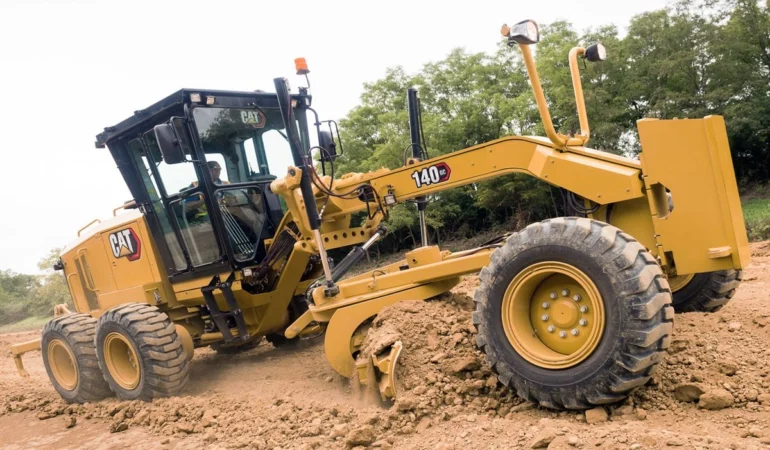
Each machine module is treated as its own area of competence. Grader training focuses on the precise blade control needed for smooth road surfaces; excavator training covers trenching, site preparation, and material handling; front-end loader training builds skill in loading and manoeuvring in confined spaces; bulldozer training covers land clearing and grading; mixture truck training focuses on concrete preparation and transport; and ADT training covers load balance, articulated steering, and safe dumping procedures. Safety protocols, machine controls, and routine maintenance are woven through every module, rather than treated as a single separate topic at the end of the course.
Hands-On Training From Instructors Who’ve Done the Work
What consistently sets a good heavy machinery programme apart is the quality of the practical instruction, not just the classroom content. At KCI Institute, training blends classroom lessons with genuine hands-on operation of the machines themselves, guided by instructors with real field experience rather than purely academic backgrounds. This matters enormously in an industry where an employer’s confidence in you depends entirely on whether you can actually operate the equipment safely under real conditions, not just describe how to in an exam.
Job Placement Support: Getting From Certificate to Career
A certificate on its own doesn’t guarantee employment, which is why job placement support is worth checking for before you enrol anywhere. KCI Institute works directly with construction and mining companies to help connect graduates with employment opportunities once training is complete, recognising that the ultimate goal of this course isn’t the certificate itself but the career it should lead to. This kind of direct industry connection is considerably more valuable than a certificate alone, particularly in a field where personal references and demonstrated on-site competence carry real weight with employers.
Flexible Learning Options for Working Adults
Not every prospective trainee can step away from existing work or family responsibilities for weeks at a time. KCI Institute offers both full-time and part-time training schedules for its Heavy Machinery programme, allowing trainees to build this qualification around their existing commitments rather than needing to put life on hold entirely to complete it.
Understanding Where Certification Fits Nationally
Uganda’s technical and vocational qualifications, including trade and operator-level certifications, fall under the oversight of the Uganda Vocational and Technical Assessment Board (UVTAB), the national body responsible for assessing and certifying competencies gained through both formal and informal technical and vocational training. UVTAB was formed specifically to bring together the assessment functions previously split across separate bodies, creating a single, unified national framework for recognising exactly this kind of practical, skills-based training. The Ministry of Education and Sports’ TVET department oversees the broader technical and vocational education system these qualifications sit within, as part of the government’s wider Skilling Uganda strategy to close the gap between education and genuine employment readiness. Understanding this national framework is worth doing before you enrol anywhere, so you know exactly what your certificate will mean once you’re standing in front of a prospective employer.
What to Ask Before You Enrol Anywhere
Whichever institution you’re considering, a few questions are worth asking directly. How many machines will you actually get hands-on time with, rather than simply observing? What is the ratio of classroom instruction to practical operation? Does the institution have direct relationships with employers who hire graduates, or does job-seeking start only after you’ve finished? And is the certification you’ll receive genuinely recognised within Uganda’s national technical and vocational framework, or is it an in-house certificate with no wider standing? The answers to these questions matter considerably more than the headline price of the course.
Why Choose KCI Institute for Your Heavy Machinery Training
KCI Institute has built its reputation on exactly the combination that matters most in this field: comprehensive, hands-on training across a genuinely wide range of machines, experienced instructors who’ve worked in the industry themselves, direct employer connections to support job placement, and flexible scheduling that respects the real constraints working adults face. Located at Kubiri Mulago, near Kakande’s Church, the institute has become one of the names Ugandans searching for genuine, career-ready heavy machinery training consistently arrive at.
Start Your Heavy Machinery Career Today
Uganda’s construction and infrastructure sectors need skilled equipment operators now, and that demand isn’t slowing down. Whether your interest is in operating a grader on a national road project, an excavator on a construction site, or a dump truck for a mining operation, the path forward starts with proper, recognised training rather than an informal shortcut that leaves you unable to prove your competence when it matters most.
Apply now to join KCI Institute’s Heavy Machinery Training programme, or get in touch with our admissions team to ask any questions about the course, the machines you’ll train on, or how job placement support works before you commit. Explore our full range of courses if you’re also considering pairing this qualification with another practical skill. Whichever machine calls to you most, the sooner you start training, the sooner you’re standing in the operator’s seat on a real job site — not just hoping to be.

