
Diploma in Mechanical Engineering Course in Uganda
Diploma in Mechanical Engineering Course in Uganda. Mechanical engineering touches nearly every industry that keeps Uganda’s economy moving — manufacturing, construction, transport, agro-processing, and the growing automotive repair sector all depend on technicians who understand how machines, engines, and mechanical systems actually work. A KCI Institute (Kenlink Institute) diploma in mechanical engineering is built to produce exactly that kind of graduate: someone comfortable in a workshop, not just in a lecture hall.
This program is one of KCI Institute’s most established technical offerings, sitting alongside its shorter Automotive Mechanics course and Driving and Mechanics course, and complementing the institute’s other diploma-level pathways, including its Diploma in Information Technology, Diploma in Electrical Engineering, and Diploma in Hotel Management.
Why Choose a Diploma in Mechanical Engineering
Uganda’s construction boom, expanding manufacturing base, and enormous vehicle fleet all need technicians who can maintain, repair, and improve mechanical systems. A diploma-level qualification signals to employers that a graduate can handle more demanding tasks than a short course alone would cover — reading engineering drawings, working with CAD software, understanding thermodynamics and materials science, and eventually pursuing registration with bodies such as the Uganda Engineers Registration Board and the Uganda Institution of Professional Engineers.
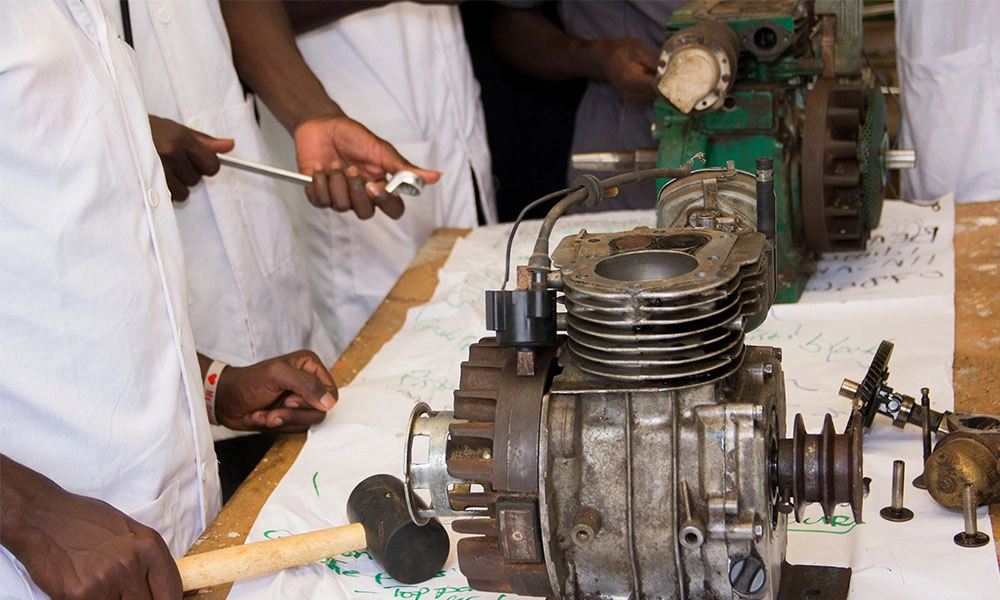
Because KCI Institute teaches this program in a hands-on technical environment rather than through theory-only lectures, students graduate having actually operated machinery, practiced welding and machining, and applied design software to real projects — not just studied the concepts behind them.
Mechanical engineering is also one of the more versatile technical qualifications available in Uganda. Unlike a narrowly specialized trade certificate, a mechanical engineering diploma opens doors across construction, manufacturing, transport, agro-processing, and energy — meaning graduates aren’t tied to a single narrow employer base and can move between sectors as opportunities shift.
Who Should Consider This Diploma
This diploma tends to suit school leavers who prefer practical, workshop-based learning over purely academic subjects, as well as working adults already doing informal mechanical or automotive repair work who want a recognized qualification to access better-paying, more regulated employment. Students who complete KCI Institute’s shorter Automotive Mechanics course frequently progress into the full diploma once they’ve confirmed mechanical engineering is the career path they want to pursue.
What You’ll Study
KCI Institute’s own curriculum for this program covers fundamental principles of mechanics, thermodynamics, and materials science; mechanics of materials, including stress and strain analysis; fluid mechanics and thermodynamics; engineering design and analysis using CAD software; manufacturing processes such as machining and welding; control systems and an introduction to robotics; engineering ethics and professional practice; and substantial project work applying these skills to real mechanical problems. Students can also pursue specializations in areas such as automotive or aerospace-adjacent engineering as they progress through the program, building on the fundamentals taught in the core mechanical engineering course.
The balance between theory and practice shifts noticeably as students progress. Early terms lean more heavily on foundational science — the physics of forces, heat, and materials behavior — while later terms shift toward applied design and manufacturing work, culminating in project work where students design, build, or repair a real mechanical system from start to finish. This project-based capstone is often what students point to afterward as the moment their classroom learning actually clicked into place.
Course Duration and Structure
KCI Institute lists several formats for this program on its mechanical engineering course page: a practical short course, a one-year certificate, a two-year diploma, and a longer three-year degree track. Most students pursuing a recognized technical qualification for employment purposes choose the two-year diploma, while those wanting a faster route into entry-level work often start with the shorter automotive mechanics short course and progress from there.
Entry Requirements
Entry requirements follow the same general standard as KCI Institute’s other diploma programs — typically a recognized secondary-level certificate with a basic pass in mathematics and physical sciences, a national ID or passport, and academic documents. The application fee listed on the institute’s own course page is 50,000 Ugandan shillings (or $15 for international applicants, $40 for non-Ugandan applicants), though this covers the application itself rather than full tuition — confirm the complete fee schedule directly through the admission page before applying.
Certification and the UVTAB/UBTEB Pathway
Technical and vocational diplomas in Uganda are typically assessed and certified through the national TVET framework, most commonly via the Uganda Vocational and Technical Assessment Board (UVTAB) or the Uganda Business and Technical Examinations Board (UBTEB), depending on the specific award. KCI Institute has written about its own relationship with UVTAB in its post on the Uganda Vocational and Technical Assessment Board, worth reading alongside this one to understand how the national certification system fits into your diploma.
Hands-On Training and Facilities
Practical training is the backbone of this diploma. Students spend a significant share of their time in supervised workshop sessions — operating machine tools, practicing welding and fabrication, working on engines and drivetrains, and using CAD software for design projects — before applying those skills to live project work. KCI Institute’s instructors bring direct industry experience to these sessions, and the institute’s broader heavy machinery training program gives mechanical students exposure to larger industrial and construction equipment alongside standard workshop machinery.
Safety training is woven throughout the practical sessions rather than treated as a single standalone module — correct use of personal protective equipment, safe operation of rotating and powered machinery, and standard workshop safety procedures are all reinforced repeatedly, since employers consistently look for graduates who treat safety as second nature rather than an afterthought.
How This Diploma Compares to a University Engineering Degree
A diploma is not the same as a full mechanical engineering degree, and it isn’t meant to be — it’s a faster, more affordable route into skilled technical work. Universities and specialized institutes such as Kampala International University’s Diploma in Mechanical Engineering and Ndejje University’s Diploma in Mechanical Engineering offer useful points of comparison if you’re weighing a technical-institute diploma against a longer academic route, while Nakawa Vocational Training College is worth knowing about as Uganda’s most established public vocational institution in this space, and Uganda Petroleum Institute Kigumba offers a comparable technical diploma track for students specifically interested in the energy sector. Many KCI Institute graduates use the diploma as a practical entry point into the workforce, then pursue further study later if they choose to move toward chartered engineer status, a pathway KCI Institute outlines in its own post on how to become a mechanical engineer in Uganda.
Career Opportunities After Graduation
Uganda’s construction, manufacturing, transport, and automotive sectors all need mechanical technicians, and diploma holders typically find work as maintenance technicians, automotive mechanics, workshop supervisors, manufacturing and production technicians, and machine operators, with experienced graduates moving into supervisory and design-support roles over time. Infrastructure projects overseen by the Ministry of Works and Transport, along with manufacturers whose products must meet standards set by the Uganda National Bureau of Standards, regularly draw on this pool of technically trained graduates. Self-employment is common too — many diploma holders eventually open their own automotive repair or fabrication workshops, particularly in fast-growing industrial areas around Kampala.
Graduates who specialize further in automotive work often move into fleet maintenance roles with transport and logistics companies, dealership service centers, or independent garages, while those who lean toward manufacturing tend to find work as production technicians and quality control staff in factories producing everything from beverages to construction materials. A smaller number go on to work in heavier industrial settings, maintaining large-scale machinery on construction sites or in processing plants.
Growing Demand for Mechanical Technicians in Uganda
Uganda’s expanding road network, growing vehicle fleet, and increasing number of manufacturing and agro-processing plants all mean demand for qualified mechanical technicians is outpacing supply in several regions. This is one of the more resilient technical qualifications a student can pursue right now, since every factory line, construction project, and vehicle fleet needs someone qualified to keep its mechanical systems running safely and efficiently.
Uganda’s growing oil and gas sector adds another layer of long-term demand. As energy infrastructure projects move forward, they increasingly need mechanical technicians familiar with industrial-scale equipment, not just standard automotive or light-manufacturing work — a trend reflected in specialized institutions such as Uganda Petroleum Institute Kigumba expanding their own mechanical and technical training capacity in response.
Life as a Student at KCI Institute
Beyond the workshop, students benefit from the wider KCI Institute community — a campus that also runs programs in electrical installation, business, and hospitality, giving the institute a genuinely mixed, practically-minded student body. Students interested in the business side of running their own workshop later on can also draw on KCI’s business consultation services once they’re ready to go independent, and prospective students weighing their options more broadly may find KCI’s posts on the top technical and vocational courses in Uganda and best courses to take after O-Level useful further reading.
Fees and How to Apply
Because full tuition figures aren’t published on the course page itself, the most reliable numbers come directly from KCI Institute — reach out through the admission page for the current fee schedule. Once you’re ready to apply, you can submit your application online, or log back in to check your application status through the institute’s student account portal. Intakes at technical institutes in Uganda typically run more than once a year, so it’s worth asking about the next available start date rather than assuming a single annual enrollment window.
Frequently Asked Questions
Do I need prior mechanical experience to enroll? No — the diploma is designed to take students from foundational workshop skills through to more advanced mechanical systems, so prior experience helps but isn’t required.
Can I start with a shorter course first? Yes. Many students begin with the shorter Automotive Mechanics course or the Driving and Mechanics course and progress into the full diploma once they’ve confirmed the field is right for them.
Is this diploma recognized nationally? Diplomas issued through Uganda’s TVET framework are assessed against national standards set by bodies such as UVTAB and UBTEB — confirm the specific certification route for this program directly with KCI Institute’s admissions team.
Will I get help finding work after graduating? KCI Institute maintains a careers page where relevant openings are posted, and instructors with industry connections often help point strong graduates toward employers actively hiring.
Start Your Diploma in Mechanical Engineering
Uganda’s factories, workshops, and construction sites need skilled, practically trained mechanical technicians, and this diploma is built to get you there without years spent purely in a lecture hall. Read more on the KCI Institute blog, browse current openings on the careers page to see what graduates in related fields are stepping into, or go ahead and apply today to secure your place in the next intake.

